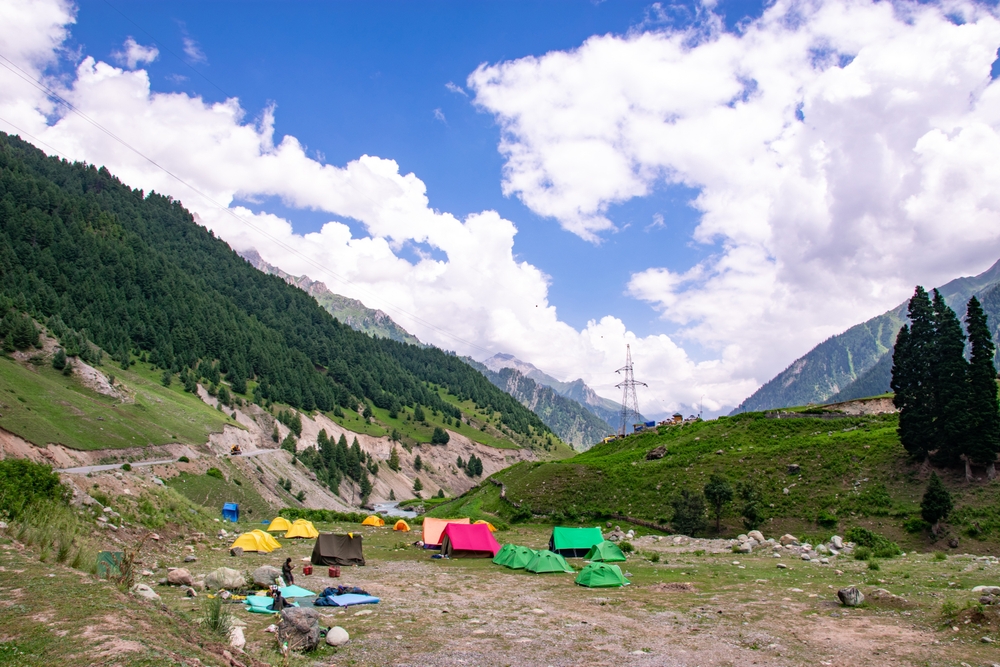
Day 2 of the Kashmir Great Lakes Trek is when the mountains stop feeling like a trip and start to feel serious. The walk from Sonamarg to Nichnai is where most trekkers quietly realise what lies ahead.
This is not the toughest day of the trek. It is also not the most dramatic. Still, it plays a bigger role than people expect. Your body is adjusting to the altitude for the first time. Sleep from the previous night may not feel complete. Muscles are warm but unsure. This day decides whether your trek settles into a rhythm or turns into a daily struggle.
Most people wake up in Sonamarg feeling confident. The trail looks friendly. The climb sounds gradual. That confidence is fine, as long as it comes with patience. Walk calmly and the day flows well. Rush it, and the mountains gently but firmly remind you to slow down.
What makes this day special is not one big moment, but a series of small transitions. Roads turn into trails. Meadows give way to forests. Silence slowly replaces excitement. Somewhere between Shekdur and Nichnai, walking stops feeling forced and starts to feel natural.
Always choose your: Best time to Do Kashmir Great Lakes Trek
Why Day 2 Deserves Your Attention
The first trekking day often passes in excitement. Day 2 brings honesty. Your breathing patterns become clear. Your pace reveals itself. Small habits, good or bad, begin to show their effects.
This is also the day when people stop asking if they are fit enough. Instead, they start thinking about how to manage their energy. That shift matters. Fitness helps, but awareness helps more.
Many strong walkers struggle here because they underestimate the day. Many first-time trekkers do well because they listen to their bodies. The trail rewards those who stay alert and humble.
Leaving Sonamarg Behind
The walk begins a few kilometres outside Sonamarg, along the Srinagar road. Early morning light spreads softly across the valley. The Sindh river runs alongside, loud and cold.
This stretch feels familiar. Vehicles pass occasionally. Shops sit quietly with shutters down. It feels like civilisation is still close. That feeling fades quickly.
A small roadside dhaba marks the last easy stop for snacks and bottled water. Many trekkers pause here without making it obvious. Nobody likes to admit they forgot something, yet most people double-check their pockets anyway.
Soon after, the trail leaves the road and begins to climb gently. The noise fades. The Kashmir Great Lakes Trek finally begins.
The First Meadow and Early Climb
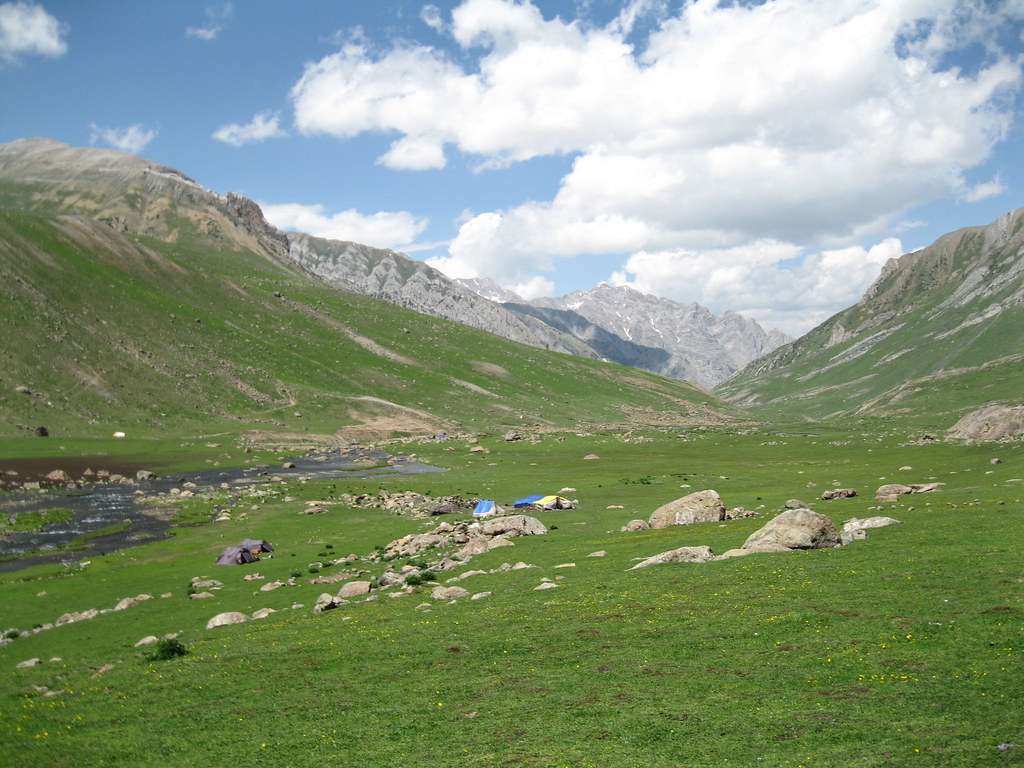
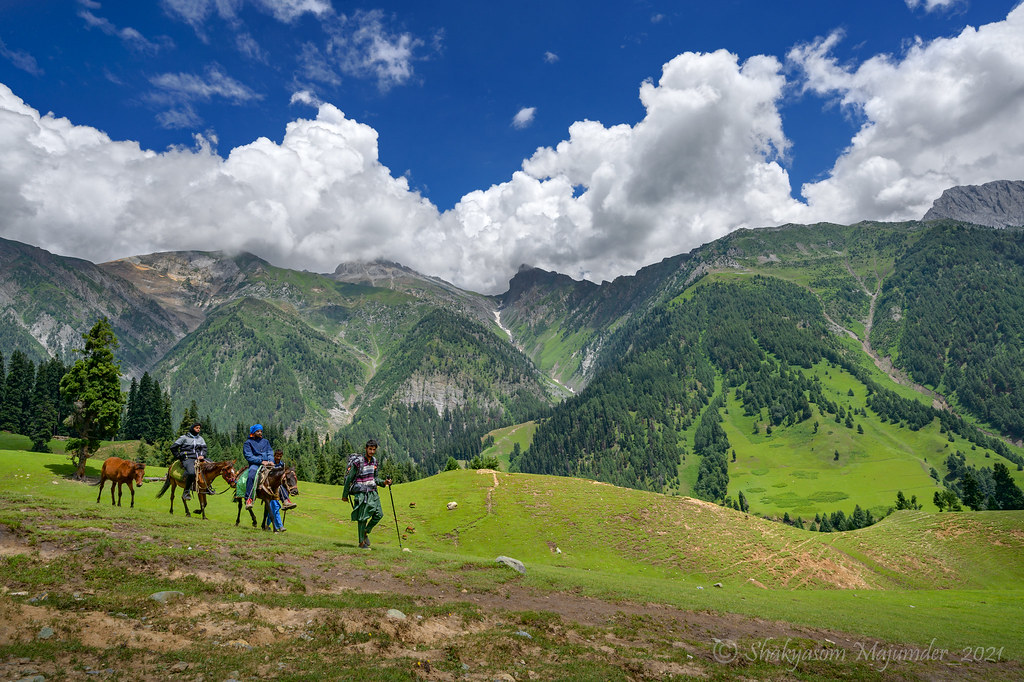
Within minutes, the path opens into a wide green meadow. Sonamarg looks small and distant from here. People stop for photos, but this stretch is best enjoyed slowly.
Breathing changes here, not sharply, but enough to notice. Shorter steps work better than frequent breaks. Let your body warm up at its own pace.
As the trail gains height, trees begin to appear. Pine needles crunch underfoot. Maple leaves filter sunlight in soft patches. The air smells clean and slightly damp.
Walking Through the Maple Forest
The maple forest arrives quietly. There is no signboard or announcement. You simply find yourself walking under a green roof.
This section feels intimate. The trail narrows. Conversations drop. Even groups tend to spread out here, each person walking at their own pace.
There is a small stream crossing where shoes may get wet. Nobody complains much. It feels like part of the experience. After the stream, the trail climbs again and the forest slowly thins.
Many trekkers later say this forest walk stays with them longer than expected. It feels personal, like the mountains offering a private welcome.
Shekdur Meadow and a Change in Mood
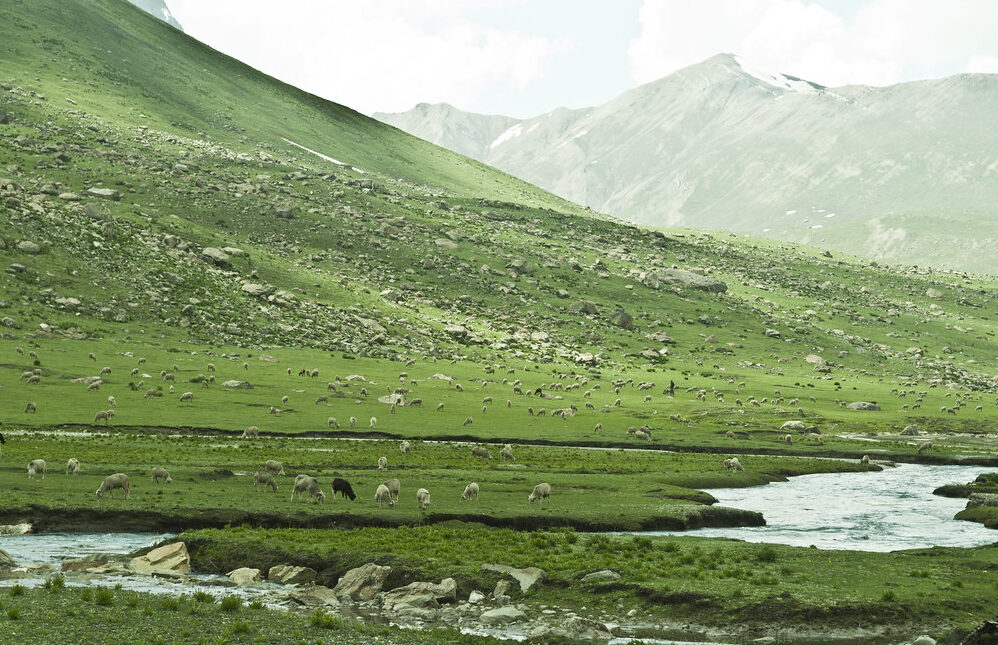
After the forest ends, the trail opens suddenly into Shekdur meadow. It feels unexpected and wide, framed by slopes on both sides.
This is a natural rest point. People drop backpacks. Mules gather here. Snacks come out. The mood shifts from effort to ease.
Shekdur teaches a small lesson. Wide open spaces can be deceptive. What looks easy often comes before tougher ground. The rocky trail after this meadow reminds you of that.
This stretch is often referred to as Nichnai via Shekdur, though most trekkers remember the meadow more than the name.
Entering the Nichnai Valley
Beyond Shekdur, the trail descends into a river valley. The river flows fast and cold, cutting through the land with force.
The path follows the right side of the river. The ground is rocky at first. Ankles work harder here. Trekking poles help, even if you usually avoid them.
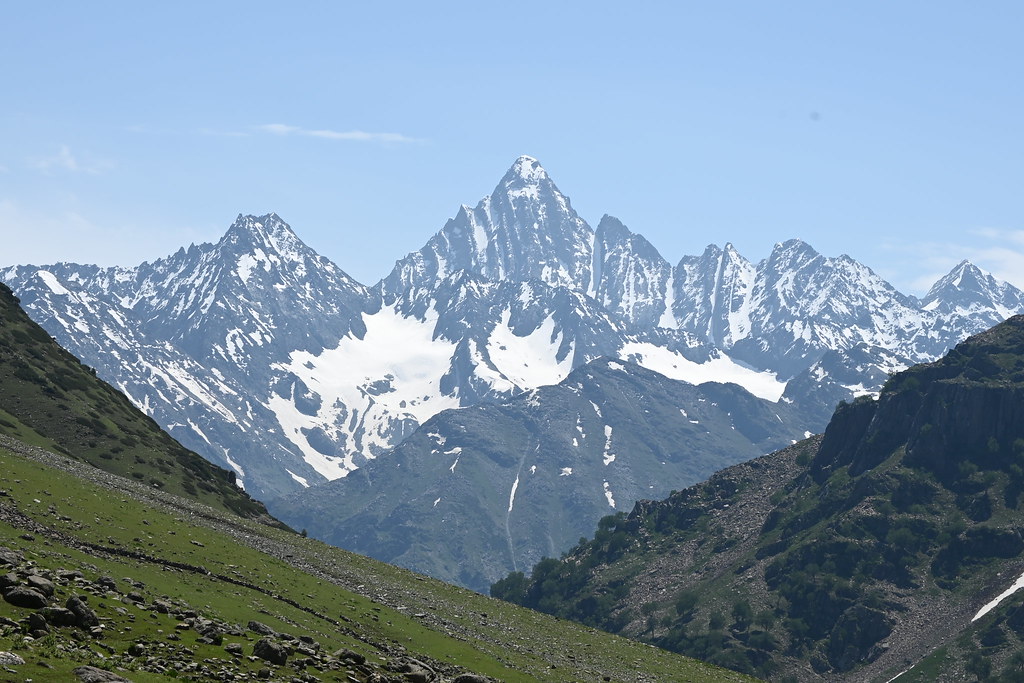
After about an hour, the terrain softens. Grass replaces stones. The valley widens. Snow-covered peaks appear behind you, marking how far you have walked without realising it.
Ahead, two sharp, triangular peaks stay in view for a long time. They look close, but the distance plays tricks on the mind. This stretch tests patience more than strength.
Reaching Nichnai Campsite
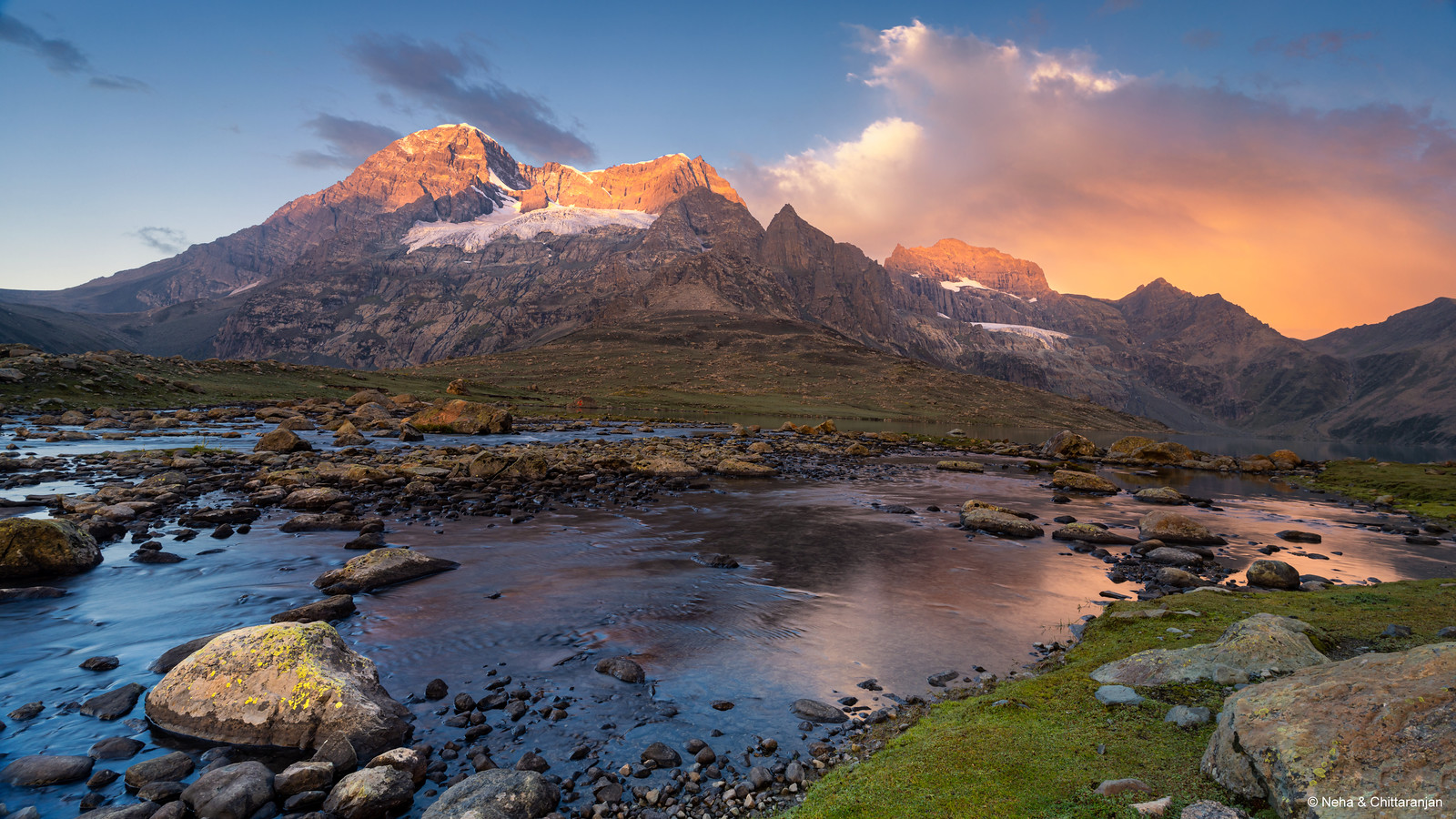
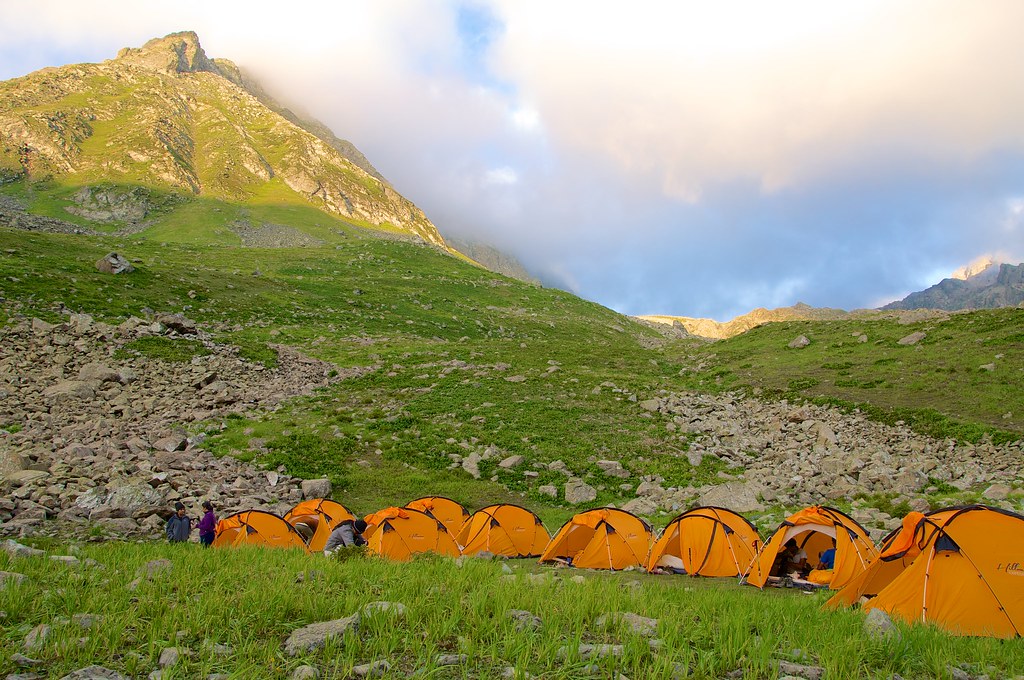
Nichnai campsite does not announce itself. You notice flat land, flowing water, and tents scattered quietly.
Cold winds arrive early here. Layers come out fast. People move slowly, aware of their bodies for the first time all day.
There is relief, but also quiet pride. The first proper mountain day is complete. Dinner tastes better. Sleep comes deeper, despite the cold.
This is also when reality sets in. Some feel strong. Some feel stretched. Both feelings are normal, and neither predicts how the rest of the trek will go.
Also Read: Total Cost on Kashmir Great Lakes Trek
Practical Thinking Points for Day 2
- Start slower than you think you should
- Eat small snacks every hour
- Keep one warm layer accessible after Shekdur
- Use poles on rocky sections
- Drink water even when it feels cold
Simple habits decide comfort more than speed.
Common Mistakes Seen on This Day
- Rushing through the first meadow
- Ignoring early fatigue
- Underestimating the cold at Nichnai
- Wearing new shoes on Day 2
The mountains do not punish mistakes. They amplify them.
What Day 2 Leaves You With
By nightfall at Nichnai, the trek stops feeling like a plan. It feels lived in. You know how your body reacts. You know how the trail feels.
As the wind brushes past your tent and the river hums nearby, one quiet thought stays with you.
If this is only the second day, how different will you feel by the end?