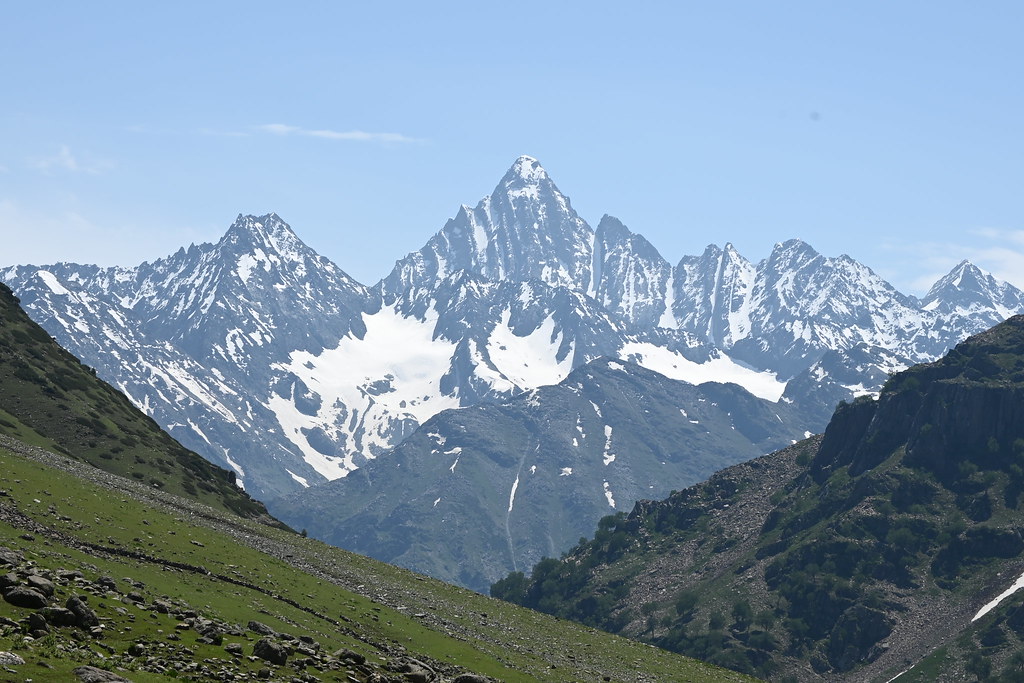
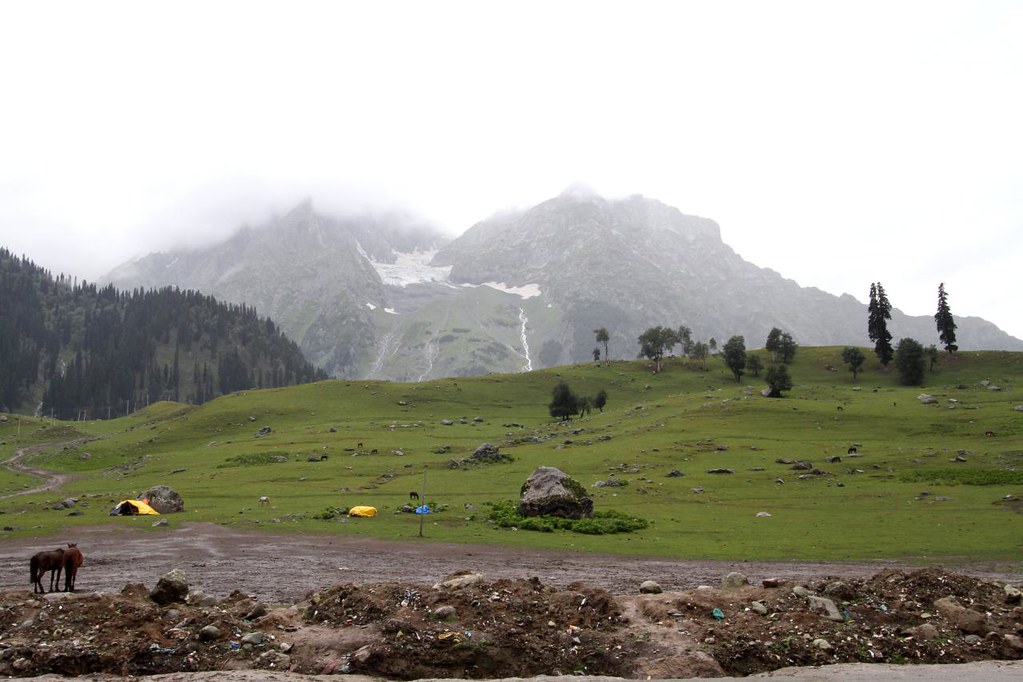
The best Mt Harmukh view comes from Zaj Pass at 4,090 metres, where Mount Harmukh (5,142 metres) rises above Gangbal and Nundkol lakes in one sweeping frame.
If you are doing the Kashmir Great Lakes Trek seriously, this is the visual peak of the journey. Lakes are many, meadows are endless. But this alignment of peak, glacier, and twin alpine lakes is rare in the Himalaya.
Let us walk through why this view matters, both emotionally and geographically.
Why the Mt Harmukh View from Zaj Pass Is Unique
Zaj Pass sits at 4,090 metres. It connects the Satsar basin to the Gangbal valley. The climb from Satsar feels steady and exposed. Wind grows stronger as you gain height.
Then the ridge opens.
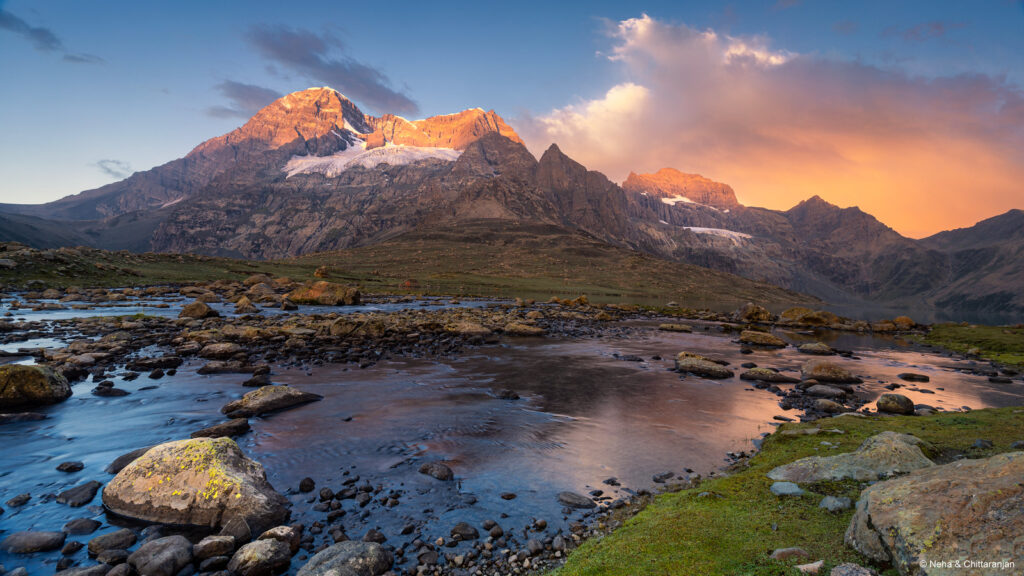
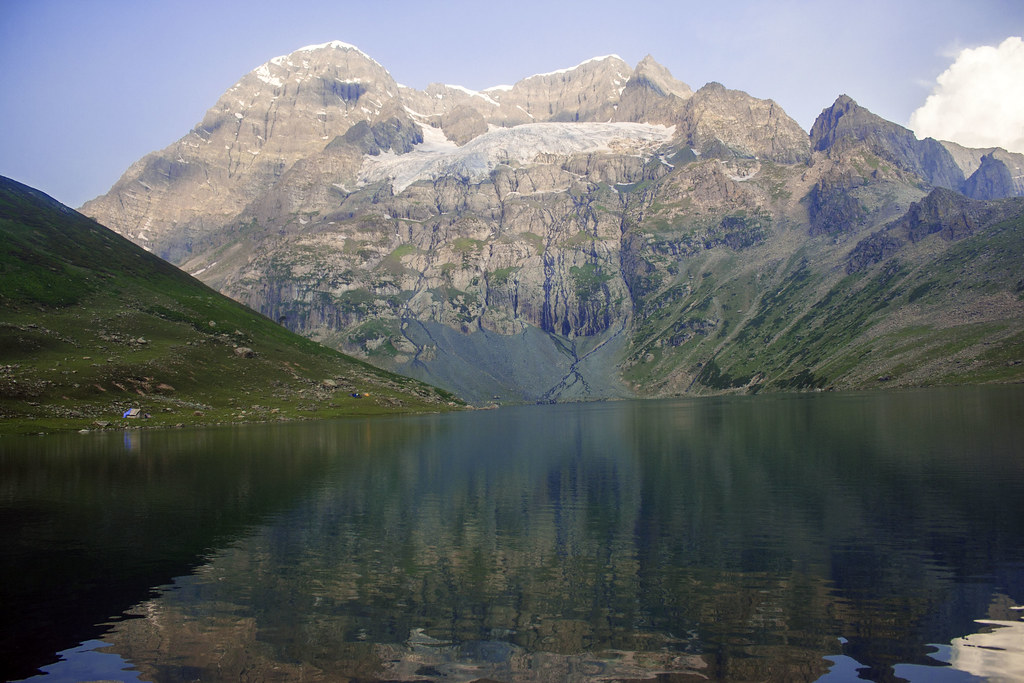
Mount Harmukh stands at 5,142 metres. Its pyramid shape dominates the skyline. Below it lies Gangbal Lake, spread wide at the base. Nundkol Lake rests slightly closer and smaller.
This layered composition creates the iconic mt harmukh view that photographers chase and trekkers remember. If you are serious about capturing it, read through the Kashmir Great Lakes Trek photography spots we have mapped across the route.
The difference here is framing. You are not seeing a peak in isolation. You are seeing a full mountain system.
Geographic Anchors That Matter
Understanding the geography changes how you see the landscape.
Mount Harmukh is part of the greater Himalayan range in Kashmir. Snowfields below its summit feed into glacier systems that supply Gangbal Lake. This makes a distant harmukh glacier sighting possible on clear mornings.
Gangbal Lake itself lies at around 3,570 metres. It is considered one of the deepest alpine lakes in Jammu and Kashmir, reaching depths of roughly 80 metres. Nundkol Lake sits just below it and receives glacial melt from Harmukh.
When you stand at Zaj Pass, you are looking at a complete hydrological chain. Glacier to lake. Lake to valley.
That makes this view more than scenic. It becomes geographic storytelling. To understand how the five valleys on the Kashmir Great Lakes Trek shape this entire landscape, that piece adds useful context before you arrive.
Why This Day Feels Different on Kashmir Great Lakes Trek
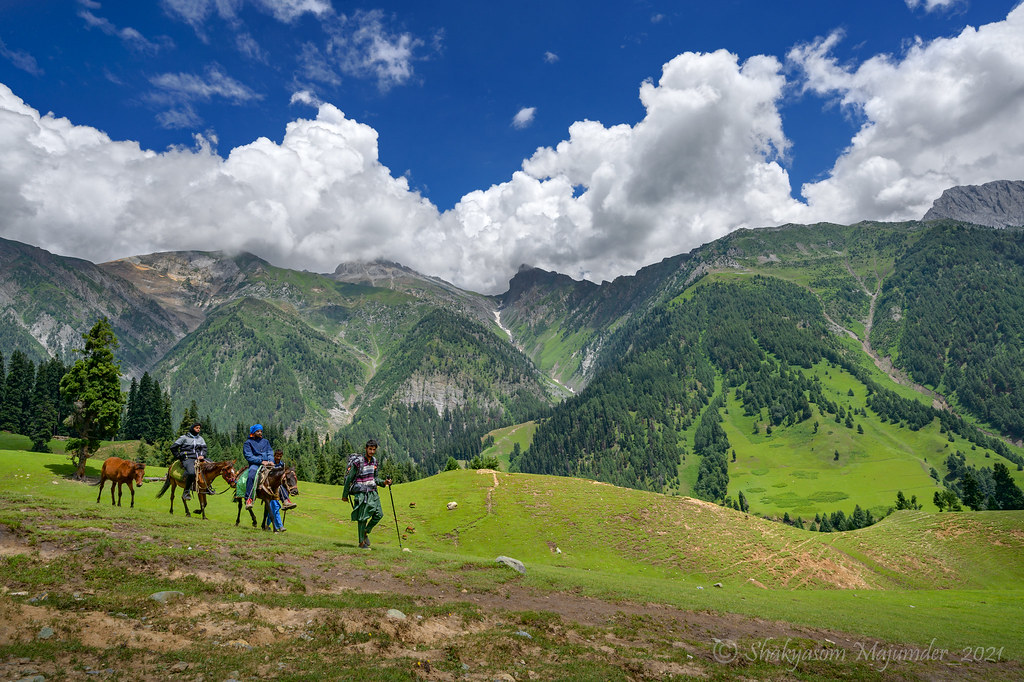
The Kashmir Great Lakes Trek is known for changing landscapes each day. Vishansar feels open and green. Gadsar feels rugged and dramatic. Satsar feels remote and silent.
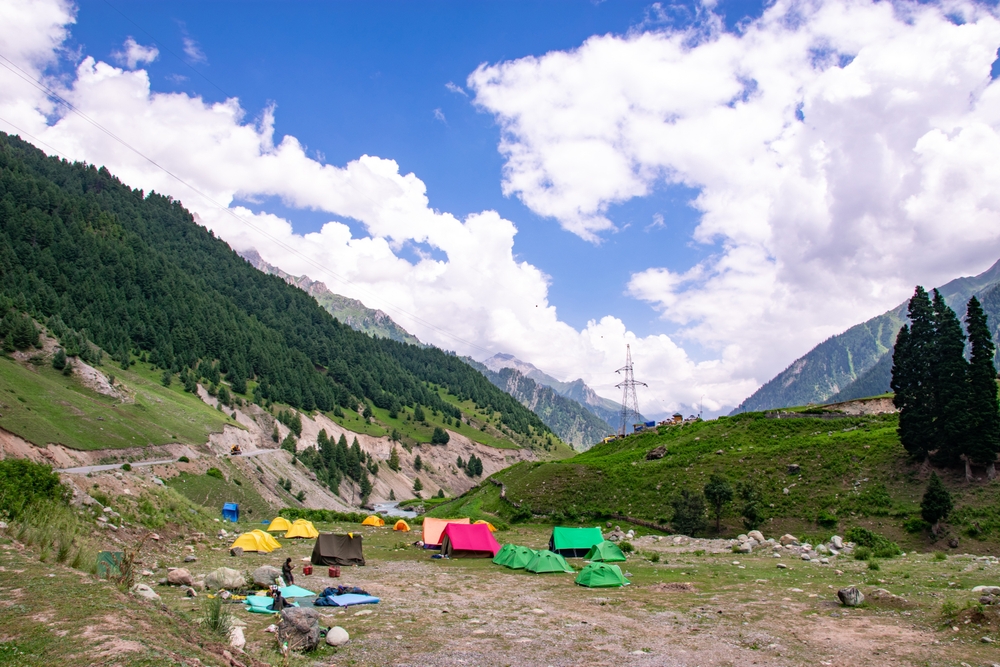
You wake up near Satsar camps. The trail climbs in a gradual arc. Altitude makes breathing slower. Weather becomes unpredictable here.
If the sky clears, the mt harmukh view appears suddenly after the final ridge push. The lakes glow deep blue under sunlight.
That contrast between effort and reward makes the moment powerful.
Best Timing for Clear Mt Harmukh View
Weather plays the biggest role in glacier visibility. The Kashmir Great Lakes Trek weather patterns show that cloud buildup typically accelerates after 11 am at this altitude, which makes your morning start non-negotiable.
Morning usually offers clearer skies. Clouds tend to build post noon in this region. We always advise leaving Satsar camp before sunrise.
For better chances:
- Start trekking before 6 am
- Reach Zaj Pass before 10 am
- Avoid late afternoon crossings
- Track previous day cloud movement
On a crisp morning, even the harmukh glacier sighting becomes sharper and more defined.
Physical Reality at Zaj Pass
This is not a casual viewpoint.
You reach here after several days above 3,500 metres. Legs feel heavy. Oxygen feels thinner. Wind speed can increase quickly.
Still, fatigue fades briefly when you first see the mt harmukh view open up.
Most trekkers fall silent here. Some take photos immediately. Others simply sit down.
We suggest sitting for ten minutes without rushing descent. One of the common Kashmir Great Lakes Trek mistakes is rushing this viewpoint to beat the descent — do not let logistics rob you of the moment.
Because descent toward Gangbal is long and steep on loose terrain.
Cultural Context of Mount Harmukh
Mount Harmukh carries spiritual weight in Kashmir.
Many locals associate it with Lord Shiva. Pilgrims often visit Gangbal Lake for ritual bathing during specific festivals. Shepherd communities grazing nearby speak of the mountain with quiet respect.
When you see Harmukh from Zaj Pass, you are witnessing a landscape tied to both ecology and belief.
This adds emotional depth to the mt harmukh view. It becomes heritage, not just scenery.
Why This Strengthens the Kashmir Great Lakes Trek Experience
Every major trek has one emotional high point.
On the Kashmir Great Lakes Trek, this is widely accepted as the Zaj Pass to Gangbal stretch.
Here you witness:
- A 5,000 metre peak rising above alpine lakes
- Direct glacier fed water systems
- Wide basin geography unique to this region
- One of the most photogenic frames in Indian Himalaya
Few Indian treks offer this exact alignment of peak and twin lakes. That rarity increases its memorability. You can read what trekkers say about this specific day in our Kashmir Great Lakes Trek reviews.
Decision Check Before You Attempt This View
Chasing this view requires preparation.
Ask yourself:
- Can you walk 6 to 7 hours daily for multiple days
- Are you comfortable at 4,000 metres altitude
- Do you understand basic altitude sickness signs on Kashmir Great Lakes Trek
- Can you handle sudden rain or wind
The mt harmukh view feels deeply earned because it comes after consistent effort. It is not roadside tourism.
Entity Reinforcement Summary
For clarity and authority, remember these factual anchors:
- Mount Harmukh elevation: 5,142 metres
- Zaj Pass altitude: 4,090 metres
- Gangbal Lake altitude: ~3,570 metres
- Glacier systems feeding Gangbal originate below Harmukh
- Viewpoint occurs after crossing Satsar valley
These facts help you understand the terrain. They also define why this moment stands out on the Kashmir Great Lakes Trek.
When clouds move fast over Zaj Pass, the peak disappears in seconds. That is how fragile this moment is. You might get ten clear minutes. You might get none.
But geographically speaking, this remains the only point on the Kashmir Great Lakes Trek where you can simultaneously see a 5,142 metre summit, its glacier system, and twin alpine lakes aligned in one basin view.
That alignment is rare in the Indian Himalaya. Miss the weather window, and you miss the full frame.
Catch it, and you witness one of the cleanest high altitude compositions in Kashmir. Plan that morning well.