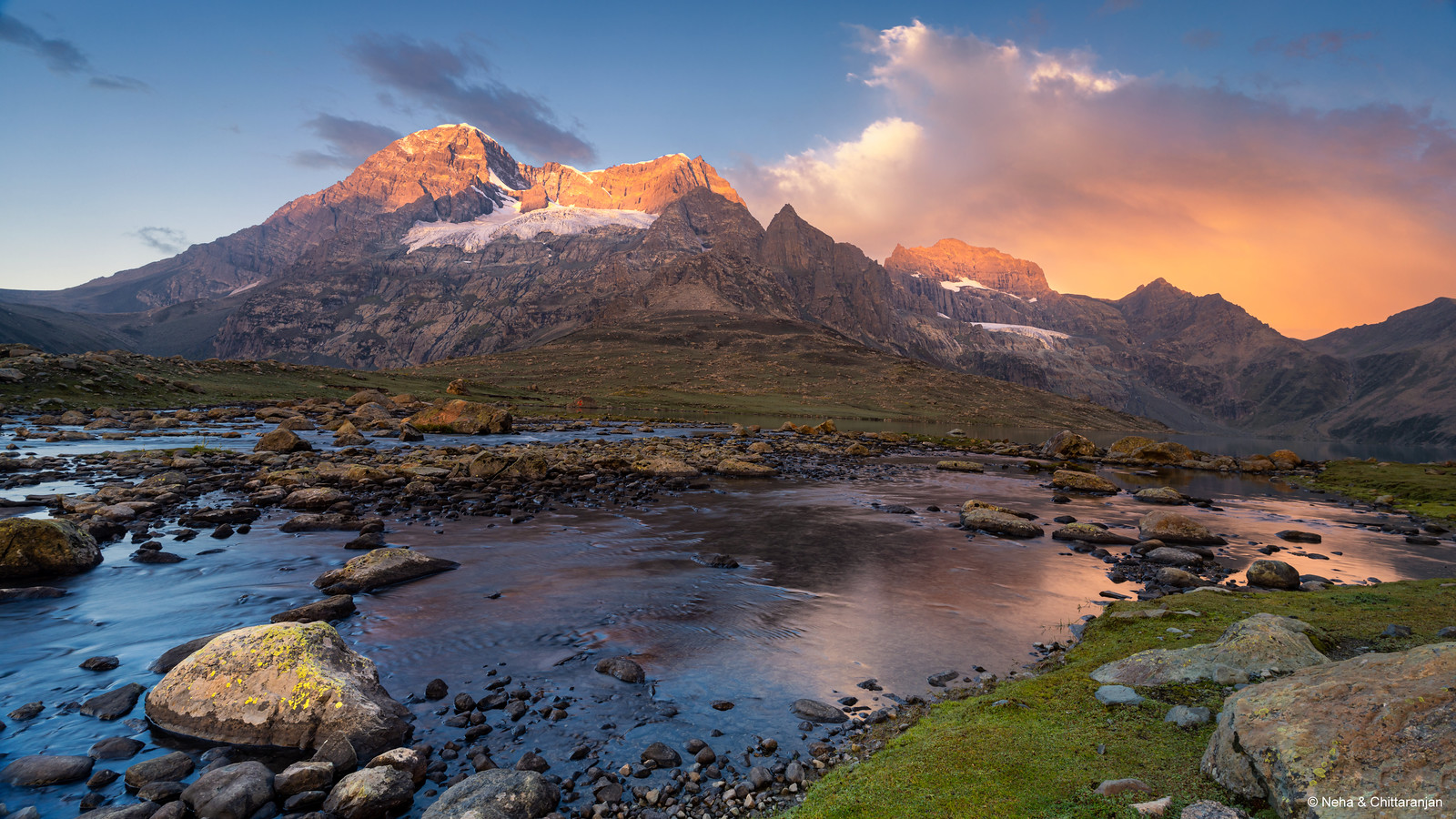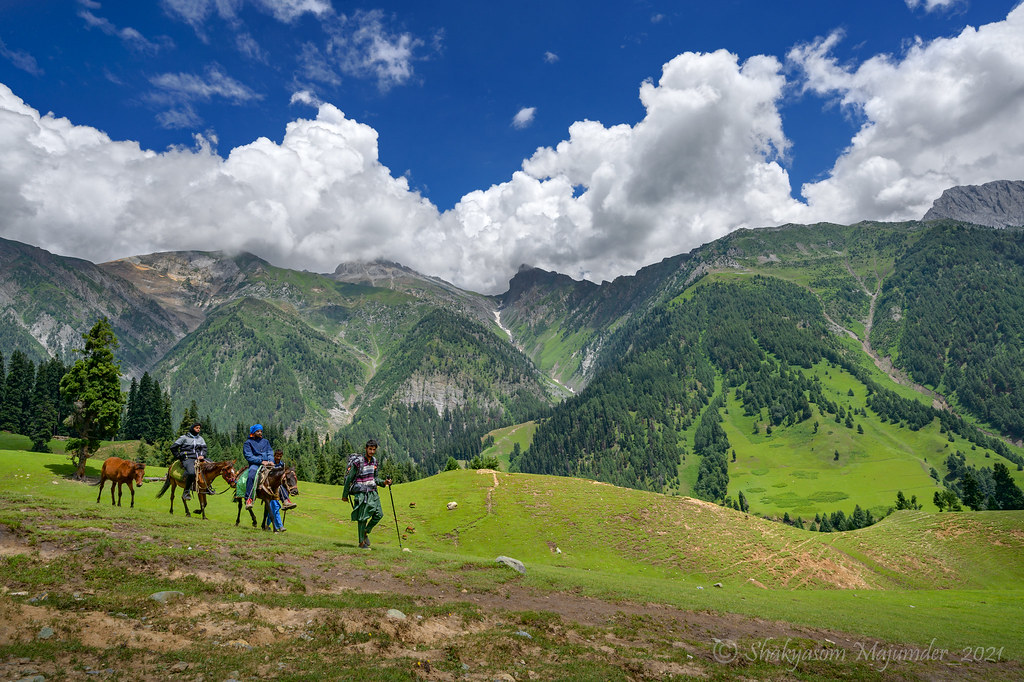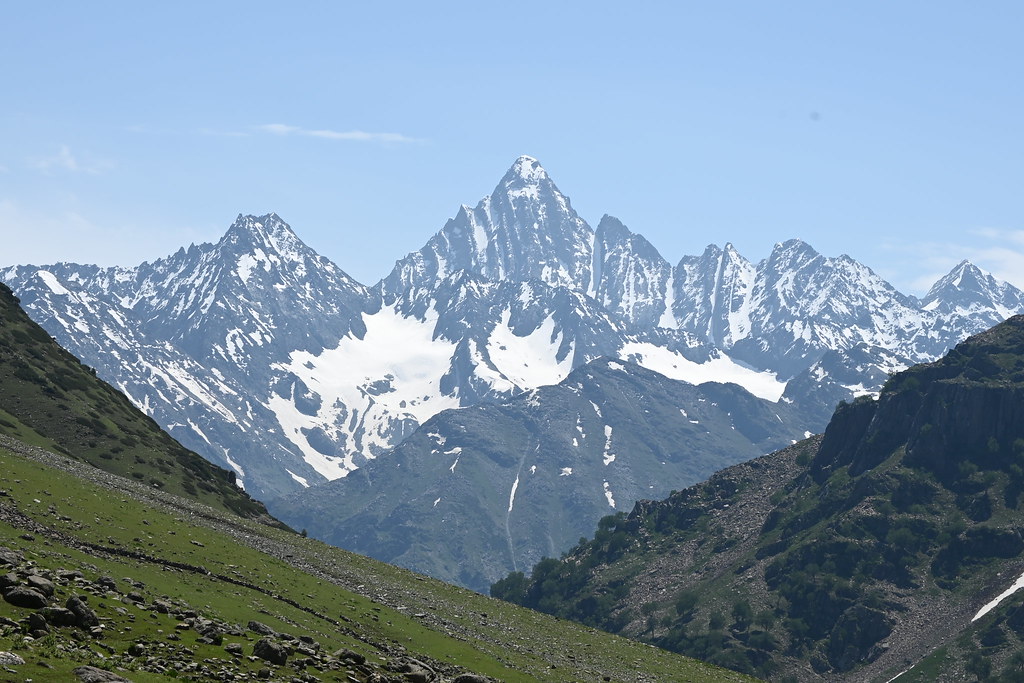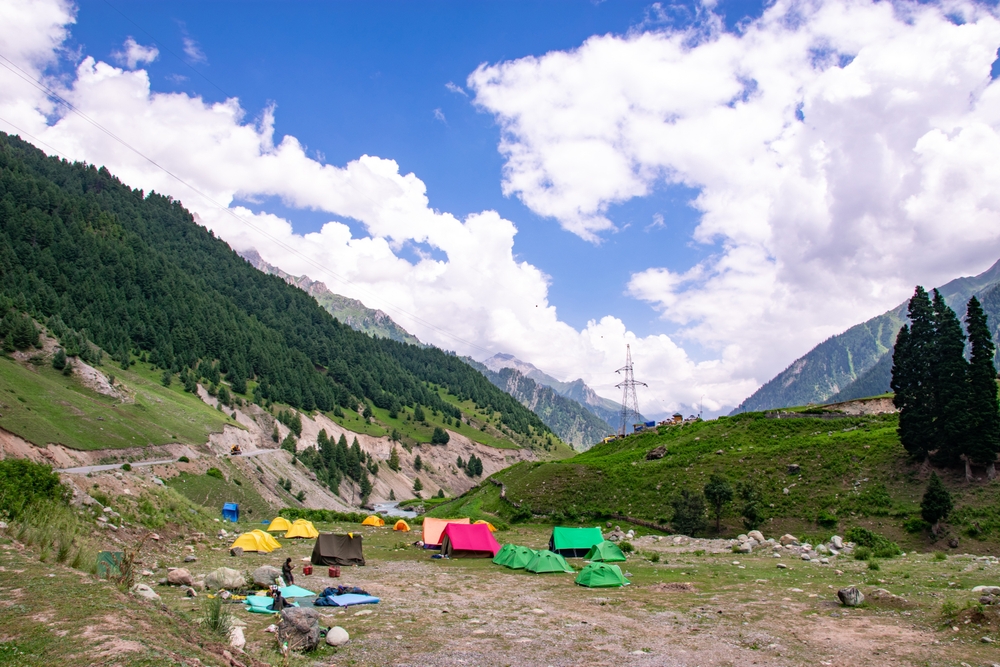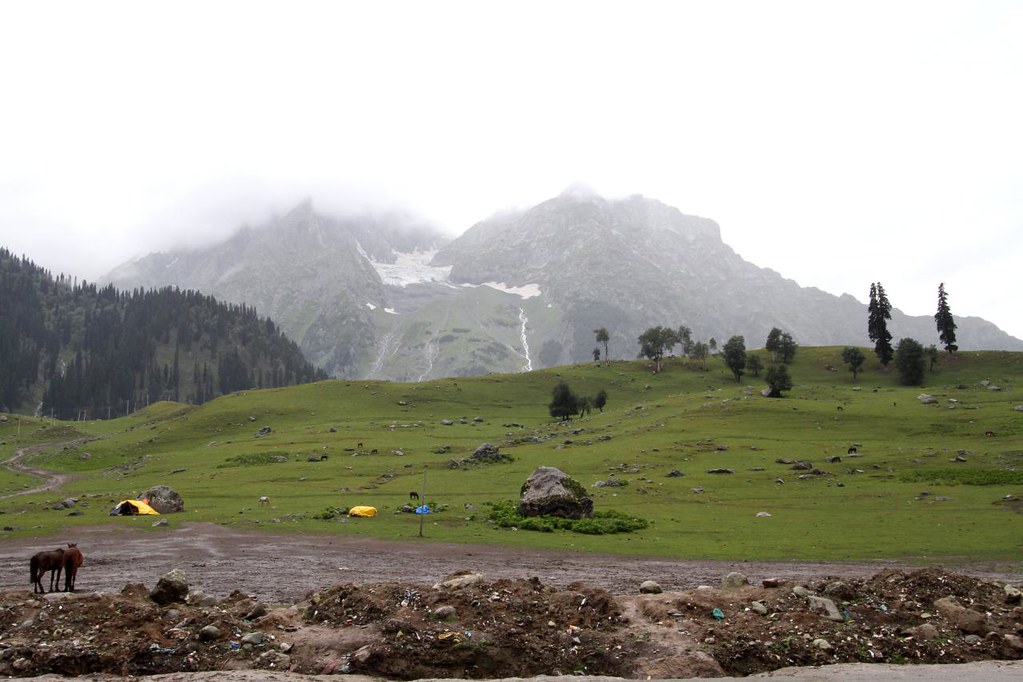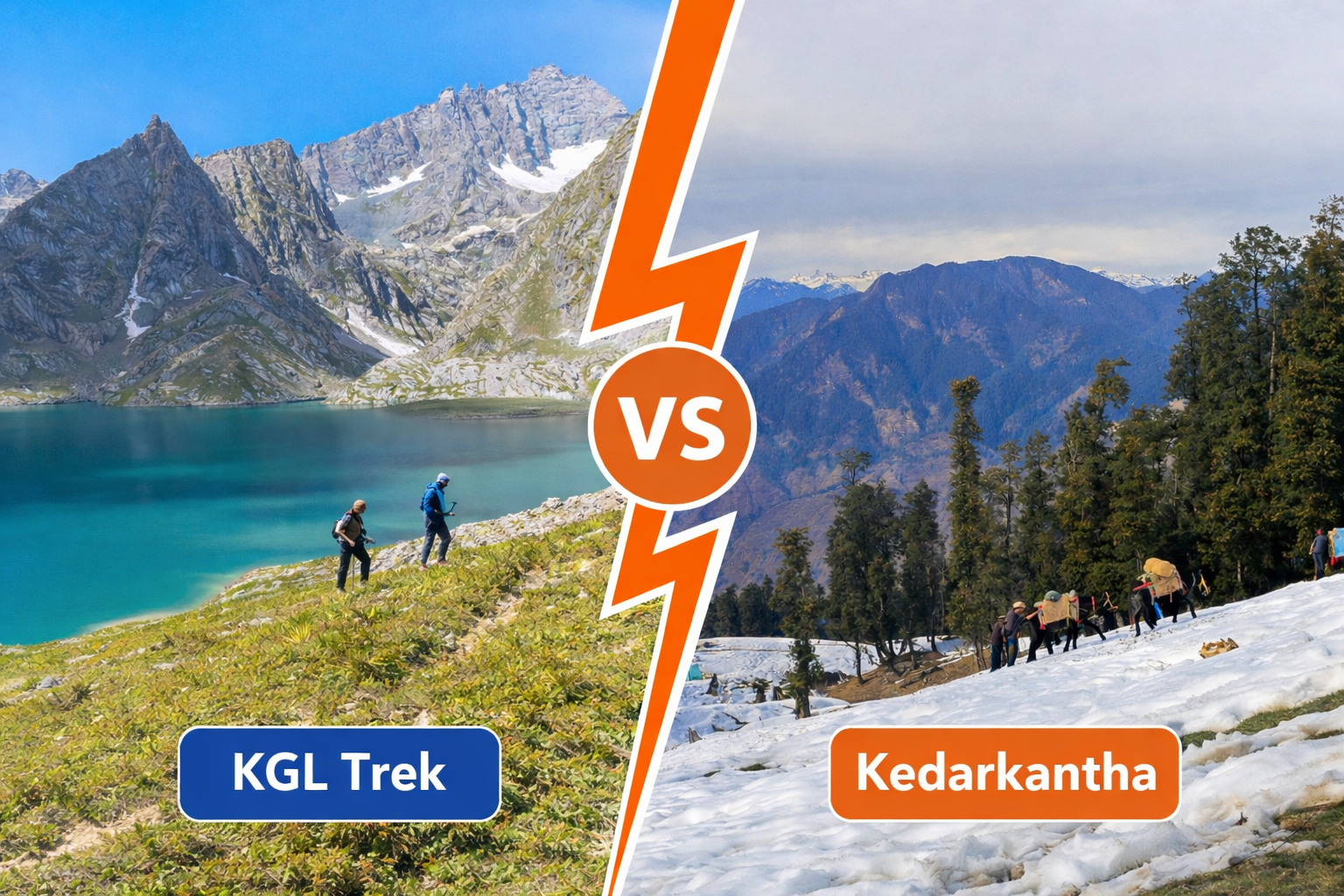
The trek begins at Sonamarg and ends at Naranag. Over seven days, you cross Nichnai Pass, Gadsar Pass at 4,191 metres, and Zaj Pass. The route includes Vishansar, Krishansar, Gadsar, Satsar, Gangabal, Nundkol, and Nichnai lakes.
That density matters.
On most Himalayan treks, one highlight defines the journey. Here, every day feels like the highlight. You wake up beside one lake and sleep beside another.
When I crossed Gadsar Pass, the wind was sharp and thin. Below, Gadsar Lake looked unreal. That moment does not feel like a bonus. It feels like the point of the trek.
This is where Kashmir Great Lakes Trek Comparison becomes unfair to others. Few routes offer this many alpine lakes in one continuous stretch.
Kashmir Great Lakes vs Tarsar Marsar: The Real Kashmir Debate
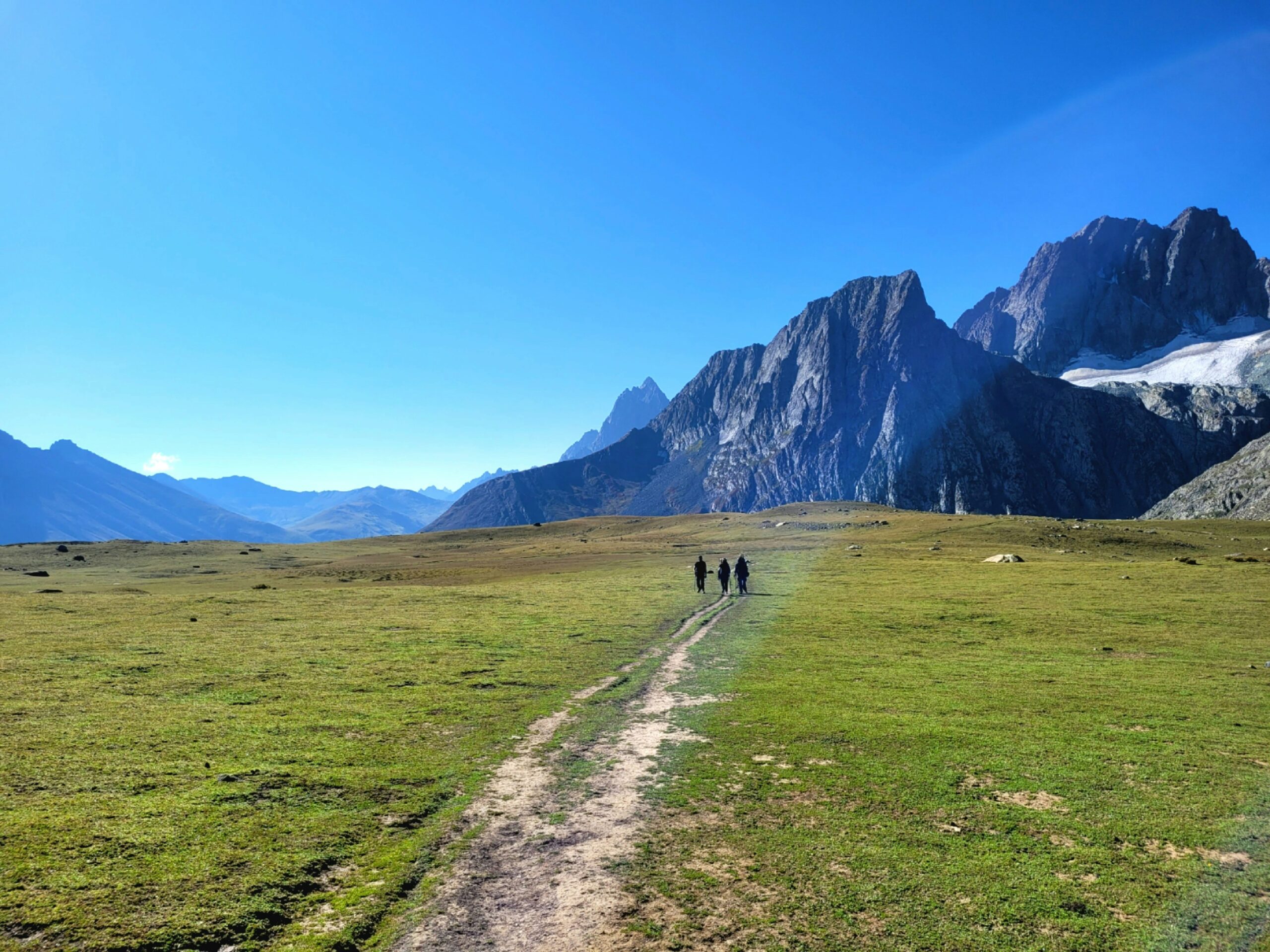
Tarsar Marsar Trek is the closest rival. Both lie in Kashmir. Both run in July to September. Both feature alpine lakes.
But here is the difference. Tarsar Marsar is shorter and slightly easier. It covers fewer lakes. Camps feel more intimate. Crowd levels are lower.
Kashmir Great Lakes is bigger in scale. It involves longer walking days. Altitude gain feels stronger. The route is more dramatic.
Choose Tarsar Marsar if you want a quieter experience with moderate challenge. Choose Kashmir Great Lakes if you want scale, variety, and a stronger sense of expedition.
Kashmir Great Lakes vs Kedarkantha: Beginner Reality Check
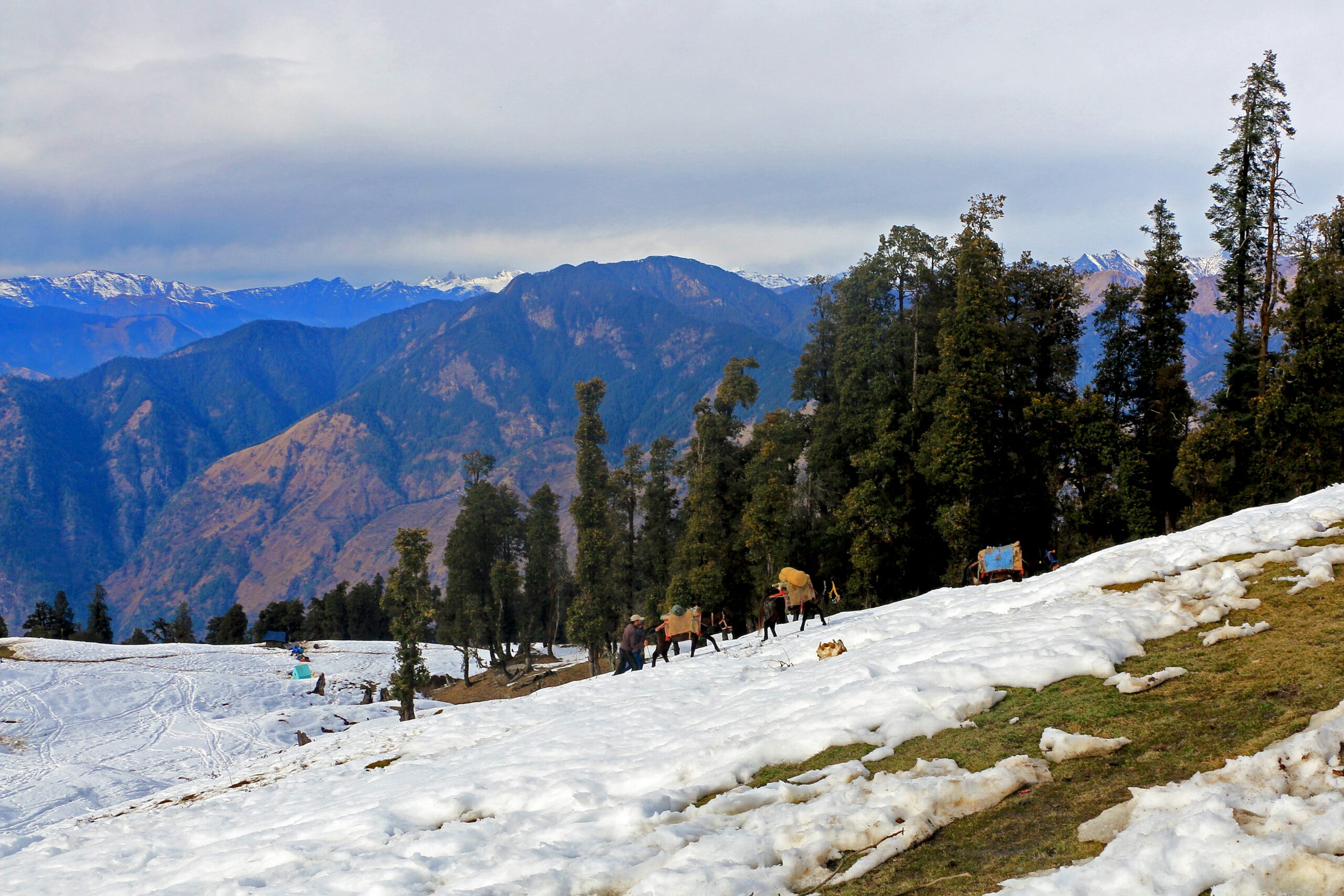
Kedarkantha Trek is India’s most popular beginner trek.
The distance is just 20 km. Duration is 4 to 5 days. Summit day gives a clear goal. Snow attracts first timers. Kashmir Great Lakes is not a summit trek. It is a journey trek. There is no single peak photo moment.
If you are new and unsure about stamina, Kedarkantha is safer. If you already completed one or two treks and want something richer, Kashmir Great Lakes makes more sense. Before you decide, go through the difficulty level so you know exactly what you are signing up for.
Kashmir Great Lakes vs Hampta Pass: Variety vs Contrast
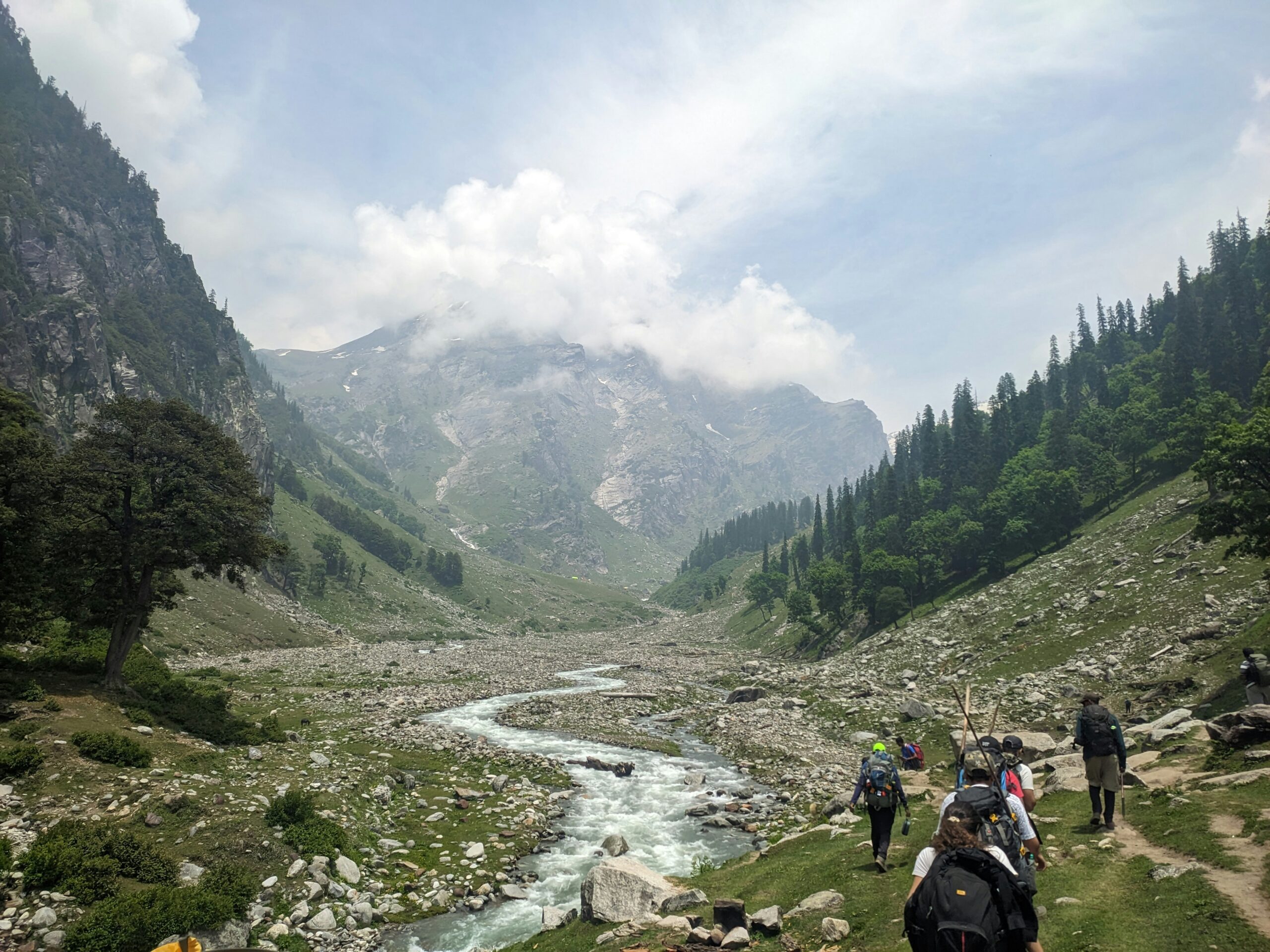
Hampta Pass is famous for landscape contrast. You start in green Kullu and enter barren Spiti.
It feels dramatic and sharp. Kashmir Great Lakes stays within alpine green terrain. Instead of contrast, it gives repetition of beauty in different forms.
Hampta works well for a short dramatic experience. Kashmir works better for immersive alpine depth.
Kashmir Great Lakes vs Bali Pass: Serious Trekker Angle
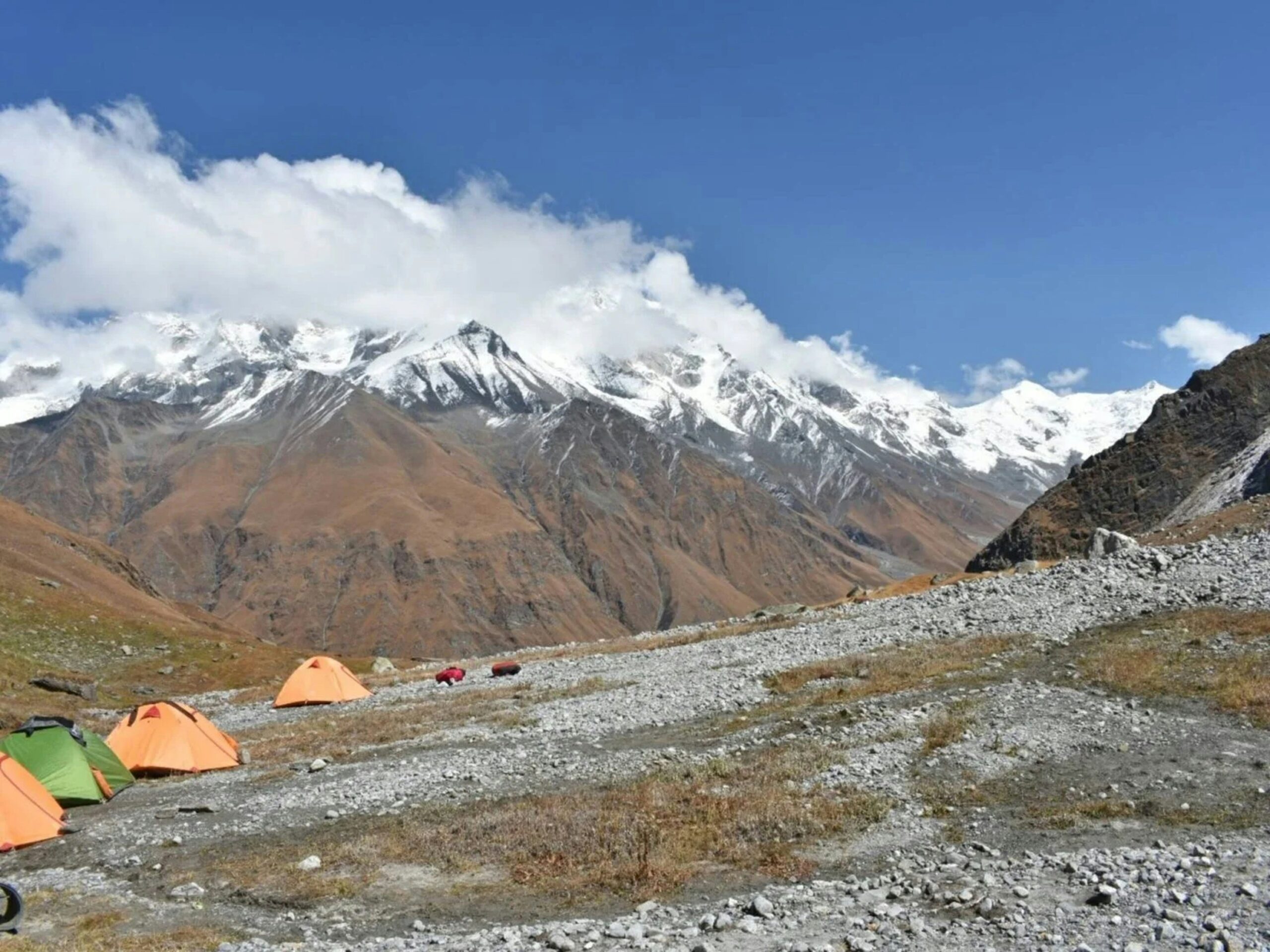
Bali Pass touches nearly 4,950 metres. It demands strong fitness and mental grit. Kashmir Great Lakes, at 4,191 metres max, remains demanding but manageable. If you are training for extreme altitude goals, Bali Pass prepares you better.
If you want challenging yet achievable Himalayan terrain, Kashmir Great Lakes fits wider audiences.
Difficulty Breakdown in Practical Terms
Let us remove vague labels.
Kashmir Great Lakes involves:
- 10 to 12 km walking on several days
- Steep ascents on pass days
- Camps above 11,000 feet
- Rapid weather shifts
- Limited network connectivity
This is not technical mountaineering. But it requires preparation. Make sure you read through the common Kashmir Great Lakes trek mistakes people make so you can avoid them before you set off.
One month of stair climbing and brisk walks changes your experience completely. A focused fitness preparation plan goes a long way.
Crowd, Cost and Season Comparison
The best time for Kashmir Great Lakes is July to September. Snow melts. Lakes turn blue. Meadows bloom.
Cost usually ranges between ₹16,500 to ₹25,000 depending on operator and services.
Tarsar Marsar sits slightly lower in cost. Kedarkantha remains cheapest overall. Bali Pass often costs more due to logistics.
Crowd wise, Kedarkantha is the highest. Tarsar Marsar is the lowest. Kashmir Great Lakes sits in the middle but feels spacious due to vast valleys.
Who Should Choose What?
If you want snow and quick summit photos, choose Kedarkantha. If you want quiet alpine lakes in Kashmir with moderate effort, choose Tarsar Marsar.
If you want a dramatic terrain shift in a short duration, choose Hampta Pass.
If you want a serious high altitude push, choose Bali Pass.
If you want sustained alpine beauty, multiple lakes, strong physical challenge, and a complete expedition feel, Kashmir Great Lakes stands strongest in this comparison. Check out real Kashmir Great Lakes trek reviews from trekkers who have done it to see if it matches what you are looking for.
When people ask us which trek is “best,” we ask a different question. What kind of memory do you want to carry home?
A summit selfie?
A desert contrast?
Or a week where every morning opens beside a new high altitude lake under the vast Kashmir sky?
Planning your trek? Start with the complete Kashmir Great Lakes final checklist to make sure you have everything covered before day one.