Uncategorized

Kashmir Great Lakes Trek Guided Tour

Guided vs Self Kashmir Great Lakes Trek: Pros & Cons

A guided Kashmir Great Lakes trek tour is the safer and wiser choice for most people, while a self-planned trek suits only those with strong mountain skills, spare time, and calm decision-making under pressure. I say this early because most trekkers ask the same thing in different ways. “Can I do this on my own?” “Do I really need a guide?” The answer is not emotional, it is practical. Most trekkers reach this decision point before even booking transport to Sonamarg. They have read blogs, watched reels, and seen photos of blue lakes. What they have not seen clearly is how this trek behaves when things stop going as planned. That gap between expectation and reality is where this choice matters. I have seen people feel relaxed and present on this route. I have also seen people drained by day three, not because the trail was hard, but because every decision sat on their shoulders. The Kashmir Great Lakes Trek does not punish mistakes instantly, but it compounds them quietly. That is why choosing between guided and self trekking is not a minor preference here. It shapes how safe, calm, and enjoyable your days on the trail actually feel. Understanding the terrain before choosing your style The route crosses high passes, rolling meadows, and exposed sections. You walk long days with a loaded backpack. River crossings are common. Campsites shift each year based on conditions. This trek tests patience more than speed, and it rewards those who plan well. Before choosing independence or support, you need to know what each option really involves. Kashmir Great Lakes Trek Guided Tour: what it really feels like A guided trek does not mean being rushed or controlled. A good guide acts more like a quiet problem solver. You barely notice their value until something goes wrong. On my first guided walk here, the lead guide changed our camp by two kilometres. We questioned him. That night, the original campsite flooded after heavy rain. That choice alone justified the entire guided fee. Pros of a guided trek Route finding is handled even in fog or snowfall Campsites are chosen based on water flow and wind Meals arrive on time, hot and filling Medical help is available for altitude issues Permits and logistics are already sorted Weather calls are made with local experience With a KGL trek with guide, you save mental energy. That energy helps you enjoy the lakes, not worry about the next problem. Cons of a guided trek Fixed itinerary leaves less flexibility Group pace may not match your own Costs are higher than self planning You rely on the team’s judgment Some trekkers dislike structure. If you enjoy full control, this can feel limiting. Self Kashmir Great Lakes Trek: freedom with responsibility Doing this trek on your own sounds romantic. You choose your pace. You stop where you like. You decide when to rest. But here is the honest part, freedom comes with pressure. You plan transport, food, permits, camps, and emergency exits. You track KGL trek weather daily. You read terrain. You judge water levels. You make decisions when plans break. I have met self trekkers who loved this challenge. I have also met those who turned back halfway, drained and shaken. Pros of a self trek Full control of daily plans Flexible rest days if weather allows Lower cost if done well Deep personal satisfaction For experienced hikers, this can feel rewarding. Cons of a self trek Route confusion in whiteout conditions High risk during river crossings No backup during injury or sickness Permit confusion at checkpoints Heavy mental load every day This trek does not forgive poor judgment. Weather changes everything on this trek People often underestimate how fast the weather changes here. Morning sun can turn into afternoon hail. A calm night can become a wind tunnel. Guides read cloud movement. Locals read wind direction. That knowledge is passed down, not Googled. If you go solo, you depend only on forecasts and instinct. Forecasts often fail often in the mountains. When weather turns bad, decision speed saves energy and health. That is where guided teams shine. Safety is not fear, it is preparation Altitude sickness does not care how fit you are. Blisters do not care how motivated you feel. A guided setup includes oxygen, medicines, and evacuation plans. Someone is watching your walk, your breath, your silence. On a self trek, you watch yourself. That works only if you are trained and honest. Ask yourself one simple question, if you twist your ankle near Satsar, what is your next move? Cost comparison without sugar coating A guided trek costs more upfront. A self trek costs more if things go wrong. Food spoilage, extra days, emergency exits, and transport delays add up fast. What looks cheap on paper can become expensive on the ground. With trusted Kashmir trek operators, costs are fixed and transparent. That peace of mind itself has value. Who should choose a guided trek without doubt First-time high altitude trekkers Solo travellers new to Kashmir People trekking with family or friends Those short on planning time Anyone anxious about weather or safety If this trek is a dream, not an experiment, go guided. Who can consider self trekking seriously Trekkers with prior alpine experience Those trained in navigation and first aid People comfortable camping alone Those with buffer days and backup funds Even then, caution is wiser than confidence. Choosing the right guide matters as much as choosing a guide Not all operators are equal. Some rush. Some cut corners. Ask questions before booking. Look for teams that limit group size. Ask about campsite selection. Ask how they handle bad weather days. A good guide speaks less and observes more. The real question you should ask yourself This trek offers beauty without filters – blue lakes, silent valleys, cold nights, long walks. Do you want to spend your energy solving problems or soaking in the moments? I have done both styles here. I

Guided vs Self Kashmir Great Lakes Trek: Pros & Cons Read More »
Kashmir Great Lakes Trek Altitude Sickness

7 Hacks to Beat Altitude Sickness on Kashmir Great Lakes Trek

Altitude sickness on the Kashmir Great Lakes Trek can be beaten with the right pace, smart acclimatization, and a few field-tested habits that experienced trekkers rely on. If you are planning this trek seriously, this is the one concern you should respect from day one. Not fear but Respect. Because the lakes are kind, but the altitude is not forgiving. I have seen strong runners struggle here while  first-time trekkers walk it calmly without a headache. The difference is not fitness alone. It is how you prepare your body and how you behave on the trail.  Why Kashmir Great Lakes Trek Altitude Sickness Happens The altitude sickness problem on the Kashmir Great Lakes Trek starts because your body climbs faster than it can adapt. The trek reaches heights close to 13,750 feet, and for many Indians coming from sea level cities, that is a significant jump. At higher altitudes, oxygen is thinner. Your body needs time to learn how to use less oxygen efficiently. If you rush this process, your brain complains first. Headache, nausea, dizziness and loss of appetite are your warning bells. Most trekkers assume that being fit means being immune. That is the first mistake. I have seen gym regulars knocked out on Day 2 while a middle aged uncle from Jaipur walked on smiling. Fitness helps, but acclimatization decides everything. Hack 1: Respect the First Two Days of Kashmir Great Lakes Trek Acclimatization The first two days decide how your body behaves for the rest of the trek. This is when acclimatization truly begins. Your body needs slow exposure. If you push hard early, you carry that stress forward. I always tell people that the trek actually starts before you start feeling tired. Walk slowly, even if you feel fresh. Take smaller steps. Breathe deeply through your nose. Let your lungs settle into the rhythm of altitude. If you feel slightly bored by the slow pace, that is a good sign. It means you are doing it right. Hack 2: Eat Even When You Don’t Feel Hungry Loss of appetite is one of the earliest signs of altitude stress. Many trekkers skip meals because food feels heavy, but that makes things worse. Your body needs fuel to adjust. Calories help your blood carry oxygen better. Warm food is even more important in the cold winds of the KGL route. Stick to simple foods e.g. Dal, rice, roti, soup, khichdi. Avoid oily snacks and packaged junk. I force myself to eat small portions even when I don’t feel like it. A few spoons now can save you from a pounding headache later. Think of food as medicine here, not pleasure. Hack 3: Drink Water Like It’s Your Job On this trek, you lose water through breath without realising it. Dry lips and dark urine are danger signs many people ignore. Aim for steady sipping, not gulping. Warm water helps more than ice cold water. A simple rule I follow is this: if you have not urinated  in three to four hours, you are already behind. Hack 4: Sleep Is Part of the Trek, Not a Break Sleep disturbance is common during the Kashmir Great Lakes trek altitude sickness phase. Light sleep, strange dreams and frequent waking up are normal. What is not normal is forcing yourself to stay awake late or chatting until midnight at camp. That steals recovery time from your body. Sleep helps your blood produce more red cells, which is how acclimatization improves naturally. Go inside your tent early. Keep your head slightly elevated. Stay warm. And don’t worry if sleep feels broken, Rest still counts. Hack 5: Listen to Your Headache Before It Screams This is where many trekkers get stubborn. A mild headache is your body whispering, ignore it and it starts shouting. If you feel a headache combined with nausea or dizziness, slow down immediately. Tell your trek leader. Do not try to “push through”. A short rest, hydration and slower pace can fix early symptoms. Continuing without adjustment can force a descent later. I have seen people ruin a dream trek because they didn’t want to look weak. Altitude does not care about ego. Hack 6: Smart Use of Medicines, Not Blind Dependence Diamox is often discussed in every trek briefing. It can help, but it is not magic. Diamox supports acclimatization by helping your body breathe faster. It does not replace slow ascent or good habits. If you plan to take it, start after medical advice. Never experiment on the trail. Some people feel tingling or frequent urination, which is normal. Think of medicine as a safety net, not the rope that pulls you up the mountain. Hack 7: Align Your Pace With KGL Trek Weather KGL trek weather plays a silent role in altitude stress. Cold, rain and fog drain energy faster than you expect. On bad weather days, slow down more than usual. Your body is already fighting cold stress, increasing your speed makes oxygen shortage worse. Layer properly. Wet clothes make altitude symptoms stronger. Keep your core warm at all times. Some days on this trek are not about distance, they are about patience. Practical Altitude Sickness Safety Checklist Use this mental checklist every morning on the trek: Are you eating properly? Are you urinating regularly? Is your headache mild or increasing? Are you walking at a pace where you can talk? Did you sleep enough last night? If two answers worry you, slow down that day. Simple. Real Decision Moments Trekkers Face on KGL Route There is always a moment on this trek when you feel fine but tired. The group moves fast. You feel pressure to keep up. That is when smart trekkers pause. I remember stopping for a minute near a ridge while others rushed ahead. That one minute of deep breathing saved me hours of headache later. The mountain rewards patience quietly. You only notice it when things go wrong. Why Acclimatization Is Mental As Much As Physical Altitude sickness is

7 Hacks to Beat Altitude Sickness on Kashmir Great Lakes Trek Read More »

Kashmir Great Lakes Trek Photography Spots

Discover 8 Magical Photo Spots on Kashmir Great Lakes Trek

Kashmir Great Lakes trek photography spots are breathtaking at every turn, but a few places truly show why trekkers carry cameras up to 13,700 feet. If you are planning this trek mainly for photos, you are already on the right track. This route is not just a walk between camps. It is a moving gallery of light, water, clouds and colour that changes every hour. I have walked this trail watching people take thousands of photos and still feel something was left uncaptured. The reason is simple. Photos here are less about equipment and more about being in the right place, at the right time, with the right patience. Let me guide you through the 8 spots where that magic happens. 1. Vishansar Lake: The First “Wow” Moment for KGL Trek Photos Vishansar Lake is usually the first place where trekkers stop and simply stare. You reach it after a long climb from Nichnai, tired but alert, and suddenly the valley opens up. Snow-fed water lies still like a mirror, reflecting clouds that move faster than your breath. Morning light works best here. The lake often stays calm before noon, making reflections sharp and clear. By afternoon, wind creeps in and the surface breaks. I remember waiting twenty minutes just to catch one cloud floating alone in the frame. That wait was worth it. If you are new to mountain photography, Vishansar is forgiving. Even a simple phone shot looks dramatic because the scene does the heavy lifting. Best frames to try here Wide shots with peaks reflected in water Low-angle shots using stones in the foreground Portraits with trekkers walking along the lake edge 2. Kishansar Lake: Where Symmetry Comes Alive Just a short walk from Vishansar, Kishansar Lake feels quieter and more balanced. The slopes around it are smoother, and the light behaves gently. Many people rush past, thinking it looks similar. That is a mistake. Kishansar rewards stillness. If you sit by the shore, you notice how the colours shift from blue to green within minutes. On cloudy days, the lake turns moody and deep, perfect for dramatic shots. This spot is ideal if you like clean compositions. There is less chaos here, fewer distractions, and more control over your frame. Why photographers love Kishansar Natural symmetry without effort Soft light during overcast weather Fewer crowds compared to Vishansar 3. Nichnai Top: The Grand Transition Shot Nichnai Top is not a lake, but skipping it would be unfair. This is where landscapes change personality. On one side, you see green valleys, on the other hand, raw mountain ridges stretch endlessly. The wind is strong here, and the weather shifts fast. Clouds roll in without warning, creating layers that look unreal on camera. I have seen people pack their cameras away due to cold and regret it later. This is where storytelling photos shine. Shots from Nichnai Top show effort, scale, and the journey itself. Think about capturing Trekkers walking along the ridge Cloud layers moving across valleys Flags, jackets, or prayer scarves adding colour 4. Gadsar Lake: The Most Colourful Kashmir Great Lakes Trek Photography Spot Gadsar Lake looks as if someone turned the saturation up, but it is real. Yellow wildflowers, green meadows, and deep blue water sit together like a painting. This contrast makes it one of the strongest Kashmir great lakes trek photography spots. Light changes quickly here because the valley narrows. Midday works surprisingly well as sunlight hits the lake directly. Early morning can be cold and dull, especially if clouds hang low. Gadsar also carries a sense of isolation. There are moments when no one else is around, and that silence shows in your photos. Don’t miss these frames Flowers in the foreground with the lake behind Reflections when the wind pauses briefly Candid shots of tired trekkers resting 5. Satsar Lakes: Mood Over Perfection in KGL Trek Photos Satsar is not one lake, it is a chain of seven small lakes scattered across a wide valley. You rarely see all of them clearly on the same day. Fog, rain, or snow usually hides a few. This unpredictability makes Satsar special. Photos here feel raw and honest. Grey skies, dark water, and lonely trails tell stories of real trekking days, not postcard moments. I personally love shooting here in bad weather. Raindrops on the lens, wet boots in the frame, and low clouds create emotion that sunny days cannot. Satsar photography works best when You embrace moody weather You focus on details, not wide shots You capture movement through fog 6. Gadsar Pass: The Highest Drama Point Gadsar Pass is where lungs burn and hearts race. At over 13,700 feet, everything feels sharper, The air, the light, and even the silence. From the top, you see layered mountain views stretching far beyond the trek route. Clouds often sit below you, which adds depth to photos. This is not a place for rushed shots. Take a break and let your breathing settle. One of my favourite shots from this trek was taken here, while pretending to adjust my shoe, and waiting for the clouds to part. Strong photo ideas Silhouettes against the sky Long shots showing tiny trekkers on trails Cloud breaks revealing valleys 7. Gangbal Lake and Nundkol: The Spiritual Frame Gangbal Lake sits below Mount Harmukh, and you can feel its importance. Locals consider it sacred, and that respect changes how you shoot here. Frames become calmer, slower, more thoughtful. Nundkol, just above Gangbal, adds contrast with its icy tone. Together, they create one of the most powerful visual combinations on the trek. Sunrise is magical here if the weather allows. The first light hitting Harmukh creates soft golden tones that reflect gently in the lake. Shoot with intention here Minimal compositions with lots of space Reflections of Mount Harmukh Quiet moments without people 8. Random Meadow Walks: The Shots You Never Plan Some of the best KGL trek photos do not come from famous spots. They come from walking

Discover 8 Magical Photo Spots on Kashmir Great Lakes Trek Read More »

Kashmir Great Lakes Trek Guided Tour

Kashmir Great Lakes Trek Food and Camps: What to Expect

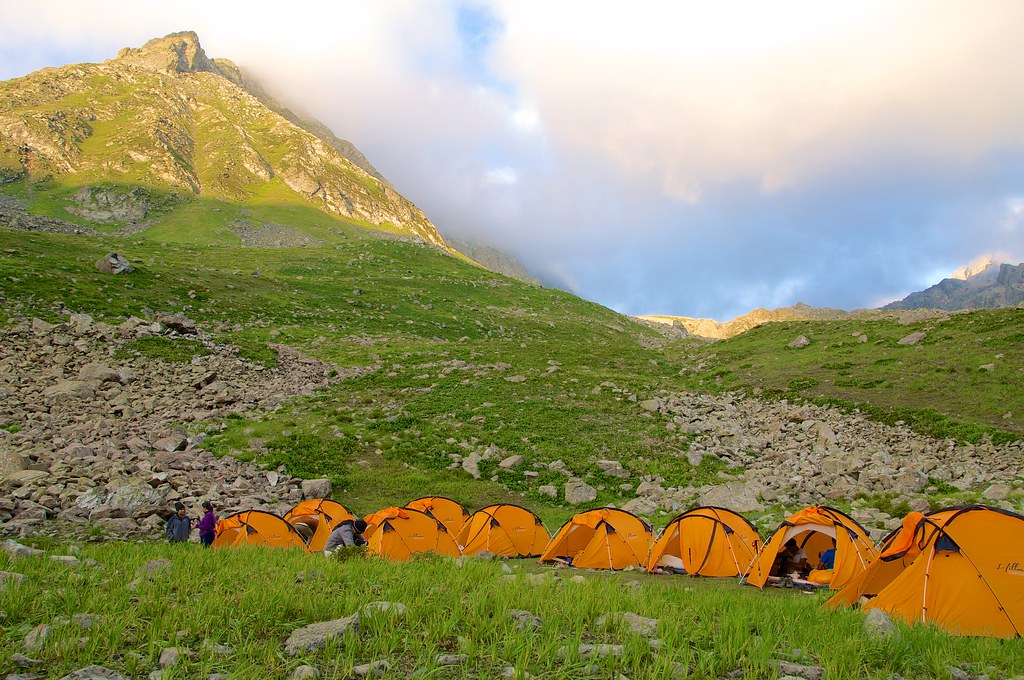
Kashmir Great Lakes trek accommodation is basic but thoughtfully organised, with shared alpine camps and warm, simple meals that keep you energised during long days of walking. That one line answers what most people want to know before committing. You will sleep in tents, eat hot food cooked by staff, and live close to nature for a week. Once that basic doubt is settled, real questions arise. How cold do the camps feel at night? Will the food suit Indian stomachs? What happens on rainy days? And will you feel comfortable after a long, tiring walk? Let me explain, just as I do for friends before they book this trek. Kashmir Great Lakes Trek Accommodation: What “Camping” Really Means When people hear “camping”, many imagine rough survival. The reality on this route is more reassuring. Kashmir Great Lakes trek accommodation is organised camping, not DIY wilderness living. Each night, you stay at fixed campsites set up in open meadows, usually near a lake or stream. Tents are already pitched before you arrive. You do not need to struggle with poles after a 10 km walk. Most operators use dome tents that sleep two people. Space is tight but manageable. You can sit, change clothes, and keep your backpack inside. At night, once you zip up, it feels surprisingly cosy, especially when the wind whistles outside. What matters most is the setting. Imagine waking up to mist rising from a turquoise lake, horses grazing nearby, and the sound of water flowing. Comfort here comes less from luxury and more from your surroundings. Inside the Camps: Tents, Sleeping Bags and Basic Facilities Life inside the camps follows a simple rhythm, walk, eat, rest, repeat. Tents come with ground sheets and sleeping bags rated for cold temperatures. Still, nights can be biting, especially above 11,000 ft. Even in August, temperatures drop sharply after sunset. Facilities are basic but functional. Separate toilet tents at each campsite Water from nearby streams or melted snow Handwash stations are simple buckets or mugs No electricity, no charging points This is where expectations matter. If you expect hotel-like comfort, you will struggle. If you accept simplicity, you adapt quickly. I have seen trekkers complain on day one and laugh about it by day three. And yes, wet wipes and toilet paper become your best friends. Kashmir Trek Camping: How Weather Changes the Experience Kashmir trek camping is closely tied to KGL trek weather. A sunny day feels magical, a rainy one tests your patience. When it rains, camps feel colder and damp. Clothes take longer to dry. Even stepping out at night feels like a chore. But camps are chosen carefully, usually on slightly raised ground to avoid waterlogging. On clear nights, the skies are unreal. Stars feel close enough to touch. Those are the moments you remember long after the trek ends. Weather also affects sleep. Wind can shake tents. Cold can wake you up early. This is why mental readiness matters more than fancy gear. KGL Trek Food: What You Actually Eat on the Trail Food is the biggest surprise for most first-time trekkers. Many expect bland, boring meals. Instead, KGL trek food is warm, filling, and very Indian at heart. Meals are cooked fresh at camps by trained kitchen staff. Food focuses on energy, not indulgence. You eat to walk better the next day. A typical day looks like this. Breakfast is simple but hearty, think porridge, omelette, toast, and sometimes paratha. Hot tea or coffee is always available there, and that first sip in the cold air feels priceless. Lunch is usually packed, rice, roti, sabzi, boiled eggs, or aloo dishes. You eat it on the trail, often sitting on grass or rocks, legs stretched, shoes off. Dinner is the main meal, rice, dal, vegetables, sometimes paneer, sometimes dessert. On some nights, you even get soup before dinner. It may not sound exciting on paper, but after climbing passes all day, it tastes perfect. Will the Food Suit Indian Stomachs? This is a real concern, and honestly, the answer is mostly yes. Food is largely vegetarian with occasional eggs. The spices are mild. Oil is controlled. The goal is digestion, not flavour fireworks. Still, stomach issues can happen. Altitude, cold, and constant walking change how your body reacts. A few practical points that help. Avoid overeating, even if the food tastes great Drink warm water whenever possible Carry your own trusted snacks Inform staff early if you feel uneasy I always carry glucose biscuits and peanut chikki. Not because food is lacking, but because familiar snacks calm the stomach. Dining Tents and Social Life at Camps Meals take place in a common dining tent, which becomes the social heart of the trek. You sit on mats, pass the salt, share stories, complain about climbs, and laugh about slips. By day three, strangers feel like teammates. This shared space also builds trust. You see who struggles, who helps, who motivates. Food brings people together here in a very real way. Evenings are slow. After dinner, people step out to look at the stars or crawl into sleeping bags early. Phones stay in backpacks. Conversations feel unfiltered. Kashmir Great Lakes Trek Accommodation vs Expectations Let us be honest. Instagram creates false impression. Camps look dreamy in photos, but reality has rough edges. You will not get hot showers. You will not charge devices daily. You may wake up with cold toes. But you will get something else, silence, space, a reset button. The key factor is mindset. If you treat camping as a problem, every small discomfort grows. If you treat it as part of the journey, it becomes a story you enjoy telling later. I still remember a night at Gadsar when wind rattled the tents nonstop. We barely slept. Yet that sunrise felt earned, as if the mountains were testing us before revealing their beauty. Hygiene, Cleanliness and Health at Camps Hygiene is decent but not hospital-level. Kitchen staff follow basic cleanliness. The

Kashmir Great Lakes Trek Food and Camps: What to Expect Read More »

Kashmir Great Lakes Trek Mistakes

5 Beginner Mistakes to Avoid on Kashmir Great Lakes Trek

Kashmir Great Lakes trek mistakes are rarely about fitness or courage. They are about small decisions made at the wrong time, often before the trek even begins. Most beginners do not quit because the trek is “too hard”. They struggle because they misunderstood what this route actually demands. If you are planning the Kashmir Great Lakes Trek for the first time, this guide is written as I would explain it to a close friend calmly, honestly and with the things I wish someone had told me earlier. This is not a fear-based article. It is one based on clarity. Why Beginners Make the Same Mistakes on KGL Kashmir Great Lakes look friendly in photos: wide meadows, blue lakes, soft green slopes. That visual comfort leads many first-time trekkers to treat it like a casual mountain holiday. But this trek is long, remote, and its mood changes mood every day. The most common errors do not occur on steep climbs. They happen in planning, packing, pacing, and mindset. Once you understand why these mistakes happen, avoiding them becomes much easier. 1. Underestimating Weather Changes on The Kashmir Great Lakes Trek This is the most common and costly beginner mistake. People read average temperatures online and assume the trek behaves like a stable hill station. It does not. KGL weather shifts faster than your phone signal disappears. I remember one afternoon near Vishansar when the sun felt warm enough for rolled sleeves. Two hours later, wind hit the campsite so hard that tea cups rattled inside tents. The temperature drop was sharp and sudden. This mistake happens because beginners plan for numbers, not behaviour. The weather here is not just cold or warm,iIt is wet, windy, bright, gloomy, all in one day. Rain often turns to sleet at higher passes. Clouds move fast and visibility drops without warning. What beginners usually get wrong Packing light jackets instead of proper insulation Assuming rain only means drizzle Ignoring wind chill completely Understanding KGL trek weather means accepting that comfort is temporary. Preparation must assume discomfort will arrive. 2. Poor Physical Preparation Beyond Basic Fitness Many beginners say, “I walk daily, so fitness should be fine.” Walking helps, but it is not enough. Kashmir Great Lakes involves long walking hours, back-to-back days, and uneven ground. Fatigue builds silently. By Day 4, even strong legs feel heavy if conditioning is incomplete. The real issue is not stamina, it is recovery. People train to walk fast, but they forget to train to walk again the next day. I have seen fit-looking trekkers slow down not because they were tired, but because their knees and hips did not recover overnight. Smarter preparation includes Stair climbing with a backpack Slow jogs to build lung recovery Stretching routines to protect joints Practising long walks on tired legs These are simple KGL trek tips, but skipping them creates cascading problems later. 3. Carrying the Wrong Gear for the Wrong Reasons Gear mistakes on KGL are rarely about forgetting items. They are about choosing emotionally instead of logically. Beginners pack for Instagram comfort, not mountain reality. Cotton hoodies, fashionable shoes, thin gloves, heavy jeans. They feel familiar at home, but become liabilities on the trail. One trekker in our group carried cotton socks because “they feel softer”. By Day 3, wet feet stayed wet. Blisters followed. Walking became painful. The mountains reward function, not familiarity. Common gear-related Kashmir trek common errors Cotton clothing that traps moisture Running shoes instead of trekking shoes Heavy backpacks filled with “just in case” items Cheap rain covers that leak after one shower The right gear does not make trekking easy. It makes suffering manageable. 4. Ignoring Acclimatisation and Body Signals This mistake is quiet and dangerous. Beginners often ignore small symptoms because they do not want to slow the group. Mild headache, Poor sleep, Loss of appetite. They assume it will pass. Sometimes it does. Sometimes it does not. Altitude on KGL is not extreme, but daily elevation gain matters. You climb, descend, and climb again. The body needs time to adapt. I once ignored a dull headache near Gadsar, thinking hydration would fix it. It did not. The next day felt heavier than it should have. Only after slowing my pace did things stabilise. Your body whispers before it shouts. Signals beginners often ignore Persistent headache after rest Nausea or dizziness Breathlessness at normal pace Loss of appetite combined with fatigue Respecting these signs is not weakness. It is experience in the making. 5. Choosing the Trek for the Wrong Reasons This is the most honest mistake of all. Some people choose Kashmir Great Lakes trek because it is trending. Others choose it because their friends are going. A few choose it because it “looks easy”. But this trek demands patience, adaptability, and mental resilience. There are no cafes. Most days, there are no charging points. Once you are deep inside the trail, there are no escape routes. Phone networks vanish early. Comfort zones disappear even faster. If you enjoy slow mornings, uncertain plans, and physical effort without luxury, this trek will will feel magic. If you need control, predictability, and constant reassurance, this route will feel harsh. Ask yourself the hard question early. Why do you want to do this trek? That answer decides everything. How to Avoid These Kashmir Great Lakes Trek Mistakes in Real Life Avoiding mistakes is not about perfection. It is about awareness. Here are practical checkpoints to keep in mind. Before booking Ask about daily walking hours, not just distance Check historical weather patterns, not just averages Understand evacuation limitations Before packing Choose function over comfort Pack layers, not single heavy items Test your shoes and backpack beforehand During the trek Eat even when you are not hungry Walk at your own breathing pace Speak up early if something feels off These are not rules, they are survival habits. The Mental Shift That Makes All the Difference The biggest shift beginners need is this. Stop treating the trek

5 Beginner Mistakes to Avoid on Kashmir Great Lakes Trek Read More »

Kashmir Great Lakes Trek Permit

6 Kashmir Great Lakes Trek Permit Rules You Can’t Ignore

Kashmir Great Lakes trek permit rules are strict, non-negotiable, and can decide whether you set foot on the trail or are turned back at the base camp. If you are seriously planning this trek, you must understand these rules before booking transport, flights, or taking leave from work. I have seen trekkers arrive in Sonamarg with excitement in their eyes, only to be told at the check-post that their papers are incomplete. The mountains stay calm. The rules do not bend. This article guides you through the six permit rules you simply cannot ignore, not as dry regulations, but as real decision points you will face while planning the trek. Why Kashmir Great Lakes Trek Permit Rules Exist (and Why You Should Care) The Kashmir Great Lakes route passes through sensitive alpine meadows, army-monitored zones, and remote villages with minimal infrastructure. These permits are not just paperwork, they are the system that keeps trekkers safe, controls footfall, and helps local authorities know who is inside the mountains on any given day. Many first-timers assume permits are “managed later” or “handled at the base camp.” That assumption causes the most stress. Kashmir trek permits are checked multiple times, not just once. Understanding this early saves you money, time, and peace of mind. Rule 1: Kashmir Great Lakes Trek Permit Is Mandatory for Every Trekker There is no casual entry on this trail. Every individual trekking the route must be registered and cleared. No exceptions exist for experience, fitness, or group size. Even if you are trekking with friends, each name must appear on the official list submitted to local authorities. This rule applies whether you start from Sonamarg or Naranag. Solo trekkers are also covered under the same requirement. If you arrive without a valid Kashmir Great Lakes trek permit, you will be stopped before the first campsite. I have seen people argue, plead, and negotiate. It does not work. Key details this permit usually includes Your full name and age ID proof details Emergency contact Trek dates and route Group or organiser name The rule exists because once you cross into the higher meadows, evacuation becomes difficult. Authorities need a clear record of who is on the route. Rule 2: Independent Trekkers Face More Restrictions Than Groups This rule surprises most people. While independent trekking is technically possible, permissions are much easier and smoother when you go with a registered trek operator. Local authorities prefer dealing with organised groups that follow fixed routes and safety protocols. As an independent trekker, you may be asked extra questions. Sometimes you will be required to prove prior high-altitude trekking experience. In peak season, permissions for solo or unregistered groups may be delayed or denied. I once met two fit, well-prepared trekkers who planned to go independently. They had gear, maps, and experience. Still, their KGL trek permissions took two extra days to clear. They lost trekking days and money. This does not mean independent trekking is impossible. It means you must factor in uncertainty while planning. Rule 3: Kashmir Trek Permits Are Date-Specific and Route-Specific Your permit is valid only for the dates and route mentioned on it. You cannot start early, extend your trek, or change direction on the go. If your permit says Day 1 Sonamarg to Nichnai, you cannot decide to rest an extra day at the base or switch exit points later. Authorities cross-check this at camps and check-posts. Weather delays test this rule the most. Sudden rain or snow may force you to halt. In such cases, the local team or trek leader coordinates with authorities. You cannot self-adjust plans on your own without informing anyone. This is why planning buffer days outside the trek is wise. Your permit controls your movement inside the trail, not your travel to and from Kashmir. Rule 4: ID Proof Is Not Optional, and Copies Matter This sounds basic, but it is one of the most common mistakes. You must carry a valid government ID. Aadhaar, Passport, or Voter ID work best. PAN cards are sometimes not accepted at security check-posts. Carry both the original and photocopies. Digital copies on your phone help, but do not rely on them alone. Network issues are common. Batteries drain faster in cold. At least two checkpoints may verify your identity against the permit list. If your name matches but you cannot produce ID, you may still be stopped. I personally keep one laminated copy in my backpack and one spare in a waterproof pouch. It feels excessive until it saves your day. Rule 5: Kashmir Great Lakes Trek Permit Depends on Local Security Clearance This is the rule you cannot control, but must respect. Security conditions in Kashmir can change. On certain days, even valid permits may be temporarily suspended due to local alerts, weather systems, or administrative decisions. This is why last-minute planning is risky. Bookings made months in advance are safer, but flexibility is still necessary. Most experienced trekkers keep one buffer day before flights out of Srinagar. Local authorities coordinate closely with army and police units. If they say no movement today, that decision is final. Arguing only adds stress. Understanding this rule helps you prepare mentally. The mountains are patient. We should be too. Rule 6: Camping Only at Approved Campsites Is Enforced Wild camping is not allowed on the Kashmir Great Lakes trek. Your permit lists approved campsites, and you must use them. This rule protects fragile alpine grasslands and water sources. It also helps rescue teams know where to look in emergencies. Even pitching a tent slightly away from the designated area can attract warnings. In some cases, trekkers have been fined or asked to move camp late in the evening. Approved campsites usually include: Nichnai Vishansar Gadsar Satsar Gangbal These sites are chosen for terrain safety, water access, and communication feasibility. Respecting this rule is part of being a responsible trekker. How Trek Operators Handle Kashmir Great Lakes Trek Permit Issues If you trek with an organiser,

6 Kashmir Great Lakes Trek Permit Rules You Can’t Ignore Read More »

Kashmir Great Lakes Trek Weather Cancel

How bad weather impacts the KGL Trek and cancellations

Bad weather can delay, shorten, or cancel the Kashmir Great Lakes trek because storms affect trail safety, river crossings, and visibility faster than any other factor. If you are seriously planning this trek, this one fact shapes every decision you make, from booking dates to packing socks. I have seen groups walk in sunshine at breakfast and turn back by lunch. The mountains here do not give polite warnings. They change suddenly. That is why understanding Kashmir Great lakes trek weather is not fear-mongering, it is basic planning. Why Kashmir Great Lakes trek weather turns unpredictable The trek is high, wide, and exposed. This geography matters more than any forecast app. Moist air from the plains rises fast, hits cold ridges, and brings rain or hail without warning. Even in peak season, the weather behaves  unpredictably. During one July trek, our guide joked about “perfect conditions” at Sonamarg. By Nichnai, clouds rolled in like a curtain. The temperature dropped, wind slapped tents all night. No warning. That is KGL. This is why KGL trek weather often changes by the hour, not by day. You plan for windows, not guarantees. How weather directly impacts your trekking days Weather does not just make things uncomfortable. It changes what is possible on the ground. Slippery trails, swollen streams, and white-out passes turn normal walking days into risk assessments. Rain and snow slow the group. Fog hides trail markers. Strong winds at exposed sections can affect balance. Add altitude fatigue and small issues grow fast. That is why organisers track Kashmir great lakes trek weather constantly during the trek, not just before it starts. Common weather patterns trekkers face on KGL Each pattern brings its own set of problems. None are deal-breakers alone, but together they decide whether you move or stop. Sudden rain spells lasting 2 to 6 hours that flood trails Cold nights where wet clothes freeze by morning Dense fog near passes like Gadsar that kills visibility Afternoon storms with wind and graupel pellets Late-season snow even in August at higher camps Most first-timers expect snow drama. In reality, rain plus cold causes more exits. Why trek cancellations happen in bad weather Cancellations are not random. They are safety decisions. When weather reaches certain thresholds, moving forward becomes irresponsible. Heavy rain swells streams that look harmless in the morning. Cloud cover hides landmarks. Cold rain drains energy faster than snow. Guides recognise these signs early. I once asked a local guide why we were turning back when the rain looked “manageable”. He pointed at the stream. “In two hours, that will eat boots,” he said. He was right. Weather situations that usually trigger cancellations These are the moments when organisers pause or step the trek. Not because they want to, but because the mountain leaves no choice. Continuous rain for 24 hours or more River crossings above knee height White-out conditions at passes High wind warnings at exposed ridges Multiple hypothermia symptoms in group If two or more occur together, the chance of cancellations rises sharply. How cancellations actually play out on the ground Cancellations rarely mean packing up and going home immediately. Most often, it starts with route changes or rest days. You may stay an extra night at a camp, or skip a lake and cross earlier, or descend to a safer exit point. Full trek abandonment is the last step. This flexible response is why understanding KGL trek weather helps you manage expectations. You are not buying a fixed itinerary, you are buying a safe experience. The mental side of bad weather on the trek Bad weather affects your mind more than your body. Wet socks, grey skies, and slow progress wear down morale. I remember a trekker asking, “Is this even worth it anymore?” That was on day three, during nonstop drizzle. Two days later, sunshine lit up Satsar like a painting. He cried quietly. Weather tests patience. Those who accept it, enjoy it more. Those who fight it suffer. What first-time trekkers misunderstand about KGL weather Most people prepare for cold but not for dampness. You can layer against the cold. Dampness creeps in. Another mistake is trusting city forecasts. Sonamarg weather does not match pass weather. Camps are higher and colder. Finally, many assume cancellations mean refunds. That is not always the case. Weather is an “act of god” clause for most operators. How to plan dates around Kashmir Great Lakes trek weather You cannot beat the weather, but you can improve your chances. Timing matters. Mid-July to mid-August offers the best balance. Snow has melted, trails are clear, and while storms still occur, the gaps are longer. Early July brings snow patches and cold rain. Late August brings shorter days and colder nights. September is beautiful but riskier. This is why most seasoned trekkers avoid the extreme ends of the season. Smart ways to reduce weather-related disappointment You plan mentally as well as logistically. These steps help you enjoy the trek even when plans change. Keep buffer days after the trek Book flexible return tickets Carry proper rain protection, not cheap ponchos Accept route changes as part of the experience Choose experienced local operators Flexibility turns frustration into stories. Packing decisions that matter when the weather turns bad Bad weather quickly exposes poor gear choices. Cotton kills warmth. Cheap rainwear leaks. Thin gloves numb fingers. One night at Gadsar, a trekker wore jeans to sleep. By morning, he was shivering badly. Weather does not forgive fashion mistakes. Waterproof layers, dry bags, and spare socks matter more than brand names. Should you cancel your trek because of the weather forecast? This is the hardest descision. Forecasts are clues, not verdicts. A predicted “rainy week” often means scattered spells. If alerts mention cloudbursts or prolonged rain systems, reconsider. If it shows light showers, wait and watch. Talk to your operator. Ask what they see on the ground. Local judgement beats apps every time. How experienced trekkers think about KGL trek weather They expect disruption. They

How bad weather impacts the KGL Trek and cancellations Read More »

kashmir great lakes trek political

How political is the Kashmir Great Lakes trek really?

The political angle of the Kashmir Great Lakes trek exists mostly in headlines, not on the trail. For most trekkers the reality on the ground feels calm, well managed, and far removed from daily politics. That one line addresses  the biggest fear straight away. This trek is not just about lakes and meadows. It carries a reputation. Some of it is deserved., but most of it is exaggerated. And a lot of confusion comes from mixing tourism with geopolitics. Why people think the Kashmir Great Lakes trek is political Before discussing safety or security, it helps to understand why this doubt even exists. Kashmir has been in the news for decades. Curfews, shutdowns, tense headlines. When you add the word “Kashmir” to any plan, family WhatsApp groups light up. But trekking routes and political hotspots are two very different worlds. The Great Lakes trail stays far away from city centres, protest zones, and sensitive civilian areas. You move through forests, alpine passes, and grazing lands where daily life looks nothing like prime-time debates. I still remember my first night near Vishansar. The only noise was wind on the tent and a shepherd coughing somewhere uphill. No slogans. No sirens. Just cold air and stars. Ground truth 1: The trek route is tightly controlled and monitored One reason the political concern about the Kashmir Great Lakes trek remains low on the ground is that this route is neither casual nor unregulated. Every trekking group moves under a fixed system. You cannot simply show up and walk in. Permits are mandatory. Details are checked. Entry and exit points are logged. Local authorities know exactly how many trekkers are on the trail each day. Security presence exists, but it does not feel intrusive. You may see the occasional army camps at a distance. Sometimes a patrol nods at you. That’s it. For first-timers, this controlled environment actually adds comfort. Someone always knows where you are. Ground truth 2: What “security” looks like on the trail When people hear Kashmir trek security, they imagine guns, barricades, and tension. The reality is far more boring, and that’s a good thing. Security here looks like routine. ID checks at Sonamarg before starting Daily movement updates shared by trek operators Restricted camping zones near sensitive stretches Clear instructions on where not to wander Most days, you forget about it completely. Your biggest worry becomes blisters, not borders. One evening, our guide casually mentioned we’d adjust the campsite by 500 metres. Not due to weather, but because of an advisory. We complied. Dinner tasted the same. Sleep was undisturbed. Ground truth 3: Locals on the route care about livelihood, not politics This is something no news panel will tell you. The people you meet on this trek are pony owners, shepherds, porters, and campsite helpers. Their world revolves around seasons, grass, weather, and income. Tourism is their livelihood. Trekkers mean work. Conversations are about snowfall, grazing routes, tea prices, and how many groups are coming this week. Politics rarely enters the conversation. When it does, it’s brief and practical, not emotional. Once, while sharing kehwa near Gangbal, a local joked that trekkers worry more about Kashmir than Kashmiris do. He wasn’t being dismissive, just practical. Ground truth 4: Disruptions happen, but they are predictable Let’s not pretend nothing ever happens. That would be dishonest. There are seasons when treks pause: elections, sudden advisories, weather combined with local events. The difference is how early and clearly this is communicated. Good operators cancel or postpone well in advance. Refunds are processed. Routes are not reopened casually. What you almost never see is chaos mid-trek. Authorities avoid that scenario as much as trekkers do. This predictability is why thousands still do the trek every year. Should you trek independently or with an organised group? If politics worries you, this question answers itself. Independent trekking here is not advisable. Not because the region is unsafe, but because the system is designed around registered groups. Organised groups bring structure. Dedicated liaison with local administration Real-time updates on advisories Backup evacuation plans Local guides who read situations instinctively I have seen guides change a plan based on a single phone call. That kind of judgement comes only with experience on this exact route. Ground truth 5: Media perception and trail reality rarely match This is perhaps the most important truth. The media works on urgency. Trekking works on rhythm. A headline might scream tension in Kashmir. On the same day, trekkers may be pitching tents under clear skies, sipping soup, and complaining about wet socks. Both can exist at once. Different places. Different realities. Understanding this separation helps you decide calmly rather than react emotionally. What about sudden internet shutdowns or curfews? This arises often. And yes, connectivity can drop, even in normal times. But think about it. You are on a high-altitude trek. You won’t have a signal anyway. Curfews affect towns, not alpine meadows. Entry and exit points are managed so trekking groups move safely. Your guide usually knows about changes before you do. Is the trek worth the money given these risks? Another honest question. If your idea of value is comfort, flexibility, and city-style freedom, this trek will challenge you. If your idea of value is raw landscapes, silence, and a sense of stepping into a different rhythm of life, it delivers far more than it costs. The political tag scares away many keeping  crowds lower, meadows quieter, lakes cleaner. Sometimes, the fear works in your favour. Practical considerations before you decide Pause here and ask yourself a few grounded questions. Am I okay trusting a system instead of full control? Can I follow instructions even if I don’t fully understand the reason? Do I accept that mountains and regions have their own rules? If these answers feel comfortable, the rest falls into place. How trekkers usually feel after finishing the route Most trekkers don’t return talking about politics. They talk about the climb to Gadsar Pass. They talk

How political is the Kashmir Great Lakes trek really? Read More »

Kashmir Great Lakes Trek Final Checklist

Kashmir Great Lakes Final Checklist: 31 Essentials (2026)

The Kashmir Great Lakes trek final checklist is simple at heart: pack light, pack smart, and carry only what truly helps you walk comfortably for seven long days at high altitude. Everything else is unnecessary. I say this as someone who has watched trekkers unpack their bags at Sonamarg, quietly removing half the things they were sure they would need. Anxiety makes us overpack. Experience teaches us restraint. This guide is meant to save you from that learning curve. Before we get to the list, let us pause for a moment. This trek is not a weekend hill walk. You cross high passes, camp beside glacial lakes, and walk for hours with no shops or exits. What you carry shapes your entire experience. A good checklist is not about fear. It is about confidence. Why a Final Checklist Matters on This Trek Most Himalayan treks forgive small mistakes. The Kashmir Great Lakes route does not do that easily. The terrain is remote, the weather changes quickly, and help takes time to arrive . I have seen sunny mornings turn to sleet by lunchtime. I have also seen people lose joy because their shoes failed on Day 3. This is why a Kashmir Great Lakes trek Final Checklist matters. It removes guesswork. It helps you decide calmly at home instead of panicking in a tent at 12,000 feet. The 31 Essentials You Actually Need Clothing: Warmth Without Bulk The cold here is deceptive. It bites early in the morning and after sunset. During the day, the sun can be harsh. Layering is not a fancy word here, it is survival. 1. Quick-dry base layers (2 sets) 2. Warm mid-layer fleece or light down jacket 3. Waterproof outer jacket with hood 4. Trekking trousers (2 pairs, quick-dry) 5. Thermal inner (top and bottom, one set) I still remember a fellow trekker wearing cotton thermals. By Day 4, they were damp, heavy, and useless. Cotton feels friendly at home. On this trek, it is a poor choice. Footwear: Your Real Lifeline If something goes wrong with your feet, the trek ends emotionally even if you finish physically. 6. High-ankle trekking boots, well broken-in 7. Woollen trekking socks (3 pairs) 8. Light sandals or floaters for camps Break your boots in at least two weeks before the trek. Do not trust “brand new” promises. The Kashmir Great Lakes trail has long grassy stretches that hide stones. Ankles need support. Backpack System: Carry Comfort, Not Ego You do not need a massive bag. You need a balanced one. 9. Trekking backpack (50–60 litres) 10. Rain cover for backpack 11. Small daypack or foldable pouch I have seen people bring 75-litre bags filled with “just in case” items. By the second pass, they look ready to barter their extra jeans for a lighter soul. Sleep and Recovery: Where the Body Repairs Itself Good sleep here is not a luxury, it is fuel. 12. Sleeping bag (rated at least -5°C) 13. Compact inflatable pillow or stuff sack pillow When the wind howls at Gadsar camp, your sleeping bag feels like home. Borrowed or under-rated bags show their true colours very quickly. Protection from Weather and Sun This trek gives you every season in one week. 14. Poncho or lightweight rain jacket 15. Sun cap or wide-brimmed hat 16. UV-protection sunglasses 17. Buff or scarf Snow glare near passes is real. So is sunburn on cloudy days. Both catch beginners off guard. Trekking Tools That Save Energy These items seem optional until your knees disagree. 18. Trekking pole 19. Headlamp or torch with spare batteries A pole is not a crutch. It is a rhythm. It takes the load off your knees, especially on descents that feel endless. Personal Care and Hygiene You will not shower for days. Comfort matters more than freshness. 20. Quick-dry towel 21. Toiletries in small containers 22. Wet wipes and toilet paper 23. Hand sanitiser Pro tip: Carry wipes in an outer pocket. Cold fingers and tight zips do not mix well at night. Health and Safety Essentials Altitude does not ask for permission. It tests quietly. 24. Personal medicines with prescriptions 25. Basic first-aid kit 26. Diamox (only after doctor advice) I have seen strong, fit people slow down because they ignored mild headaches. Listening to your body is part of the checklist too. Documents and Small But Critical Items These are easy to forget. They are impossible to replace mid-trek. 27. Government ID and photocopies 28. Permits (usually arranged by organisers) 29. Cash (no ATMs beyond base point) Keep documents in waterproof covers. Rain has no respect for paper. Fuel for the Mind and Body Food keeps you moving. Familiar tastes keep you sane. 30. Energy bars, dry fruits, ORS 31. Reusable water bottle (1–2 litres) I always carry a small pack of roasted chana. It reminds me of home and works better than fancy gels. Common Packing Mistakes to Avoid Most mistakes come from fear or overconfidence. People pack too many clothes, thinking warmth means quantity. Others skip rain gear because the forecast looks clear. Forecasts in Kashmir are suggestions, not guarantees. Another common error is ignoring weight. Every extra kilo feels fine at home, but on a steep climb to Gadsar Pass, it feels significant. How to Use This Checklist Wisely Do not print this list and blindly tick boxes. Lay everything on the floor. Pick each item and ask one question. Does this help me walk, stay warm, sleep, or stay safe? If the answer is no, reconsider. This KGL Trek Final Checklist is not about perfection. It is about intention. Packing with clarity makes the trek lighter, both physically and mentally. Conclusion The Kashmir Great Lakes trek offers you beauty, silence, and challenge in equal measure. What you carry decides how much of that beauty you actually notice. Pack like someone who trusts the mountains, but respects them too. And when you zip up your bag for the last time, ask yourself one quiet question. Are

Kashmir Great Lakes Final Checklist: 31 Essentials (2026) Read More »

Kashmir Great Lakes Trek Safety

How Safe Is Kashmir Great Lakes Trek? Avoid 8 Mistakes

Kashmir Great Lakes trek safety is high for trekkers who prepare properly, pace themselves, and respect how remote this landscape really is. This is not a risky expedition, but it is also not a relaxed holiday walk. Once you understand that balance, most safety worries lose their edge. When people ask me if this trek is safe, I do not reach for dramatic stories. I talk about judgment. I talk about preparation. And I talk about the quiet choices people make every day on the trail that decide whether the trek feels smooth or stressful. I have walked this route across multiple seasons with beginners, solo travellers, and seasoned trekkers. Every real safety issue I have seen came from rushed thinking, not from the mountains themselves. Understanding Kashmir Great Lakes Trek Safety in Real Terms The Kashmir Great Lakes trek runs roughly between 7,800 feet and 13,800 feet. Camps like Vishansar and Gadsar sit high in open meadows, with little tree cover and wide exposure to wind. This is where beauty and vulnerability meet. Clear skies feel magical. Sudden clouds feel serious. Safety here depends far more on planning than on technical skill. There are no ropes, no vertical climbs, and no knife-edge ridges. What challenges people are long walking days, river crossings, cold nights, and fast-changing weather. When someone says the trek feels unsafe, it usually means their expectations were wrong. They expected comfort where there was wilderness. Once that mismatch disappears, the trail feels demanding but fair. Is Kashmir Great Lakes Trek Safe for Beginners? Yes, beginners complete this trek safely every season. But they succeed because they prepare honestly, not because the trek is forgiving. Daily walks often stretch between 10 and 15 kilometres over uneven ground. At lower altitudes this feels manageable. Above 12,000 feet, the same distance slows everyone down. If you arrive with basic fitness, patience, and a willingness to listen, safety stays on your side. Problems usually start when beginners chase pace or compare themselves to others. The mountain does not care if this is your first trek. It only responds to how steadily you move. Trek Difficulty Breakdown Factor Level Why Technical Skill Easy No ropes or climbing involved Distance Moderate Long daily walks of 10–15 km Altitude Challenging Reaches up to 13,800 feet Terrain Moderate Uneven trails and river crossings Weather Unpredictable Sudden rain, wind, or cold Remoteness High Limited evacuation access Will Altitude Affect Kashmir Great Lakes Trek? Altitude plays the biggest role in safety on this trek. You cross 10,000 feet quickly and spend several nights above 12,000 feet. Oxygen levels drop, sleep becomes lighter, and appetite often fades. These changes are normal. They are not danger signs by themselves. Risk appears when people rush ascents, drink less water, or hide symptoms to avoid slowing the group. I have seen fit gym-goers struggle here simply because they treated altitude like a challenge instead of a process. Common altitude symptoms to watch for: Headache, often the first sign Nausea or vomiting Dizziness or lightheadedness Fatigue that does not improve with rest Loss of appetite Poor or broken sleep Smart altitude prevention habits: Drink at least 4 to 5 litres of water daily Limit altitude gain to about 1,000 feet per day once above 10,000 feet Walk at a pace where you can talk comfortably Discuss Diamox use with your doctor if advised Never hide symptoms from trek leaders Walking slowly feels boring on day one. It feels wise on day three. Do You Need a Guide to Ensure KGL Trek Safety? In my opinion, yes. Not because the trail is confusing at every turn, but because conditions shift fast here. Large grasslands cause paths to fade and split. Fog can roll in within minutes near passes like Gadsar. A local guide knows which streams swell first and where wind hits hardest by evening. Guides also stay connected with nearby villages and forest staff. That local coordination matters when weather turns or someone needs help. Going without a guide saves money, but it removes safety layers you only notice when they are gone. Weather and Temperature Reality on the Trail Many trekkers underestimate how cold this route can feel, especially at night. Sunshine creates a false sense of comfort during the day. Temperature patterns are fairly consistent: Daytime at lower camps stays around 15 to 20°C Nights at higher camps like Vishansar and Gadsar drop to –2°C to –5°C Gadsar Pass can feel close to –10°C with wind chill Mid-July to mid-September usually offers the most stable weather Cold affects sleep. Poor sleep affects recovery. And tired bodies make poor decisions the next day. For a complete month-by-month weather breakdown, see our guide on the best time for Kashmir Great Lakes trek. If you’re specifically considering trekking in July, expect pleasant daytime temperatures but pack for cold nights. Fitness Preparation That Actually Improves Safety This trek is not about speed. It is about endurance and recovery. Vague preparation leads to vague outcomes. Clear preparation reduces risk. Minimum fitness benchmarks that help: Start training at least 2 to 3 months before the trek Do 30 to 45 minutes of cardio, 4 to 5 times a week Include jogging, cycling, stair climbing, or swimming Practice 7 to 10 km walks carrying an 8 to 10 kg backpack Test yourself honestly: can you walk 5 km without heavy breathing? Fitness does not make the trek easy. It makes it manageable when conditions turn rough. 8 Common Mistakes That Reduce Your Safety on Kashmir Great Lakes Trek Most problems here grow quietly. They start with small choices repeated over days. 1. Choosing dates without checking conditionsEarly season brings snow and freezing nights. Late season invites rain and early snowfall. Understanding the best time to trek helps you avoid these conditions. 2. Ignoring basic fitness preparationFatigue increases slips, poor balance, and slow recovery. 3. Carrying extra weight out of fearEvery extra kilo strains knees and posture at altitude. 4. Underestimating cold at nightPoor insulation ruins

How Safe Is Kashmir Great Lakes Trek? Avoid 8 Mistakes Read More »